Barley and Rice Shochu After 20 Years: The Flavor Worth Creating Now [Part 2]
Technique and passion honed through sweet potatoes. Unraveling the passion for shochu production.
[Summary of Part 1]
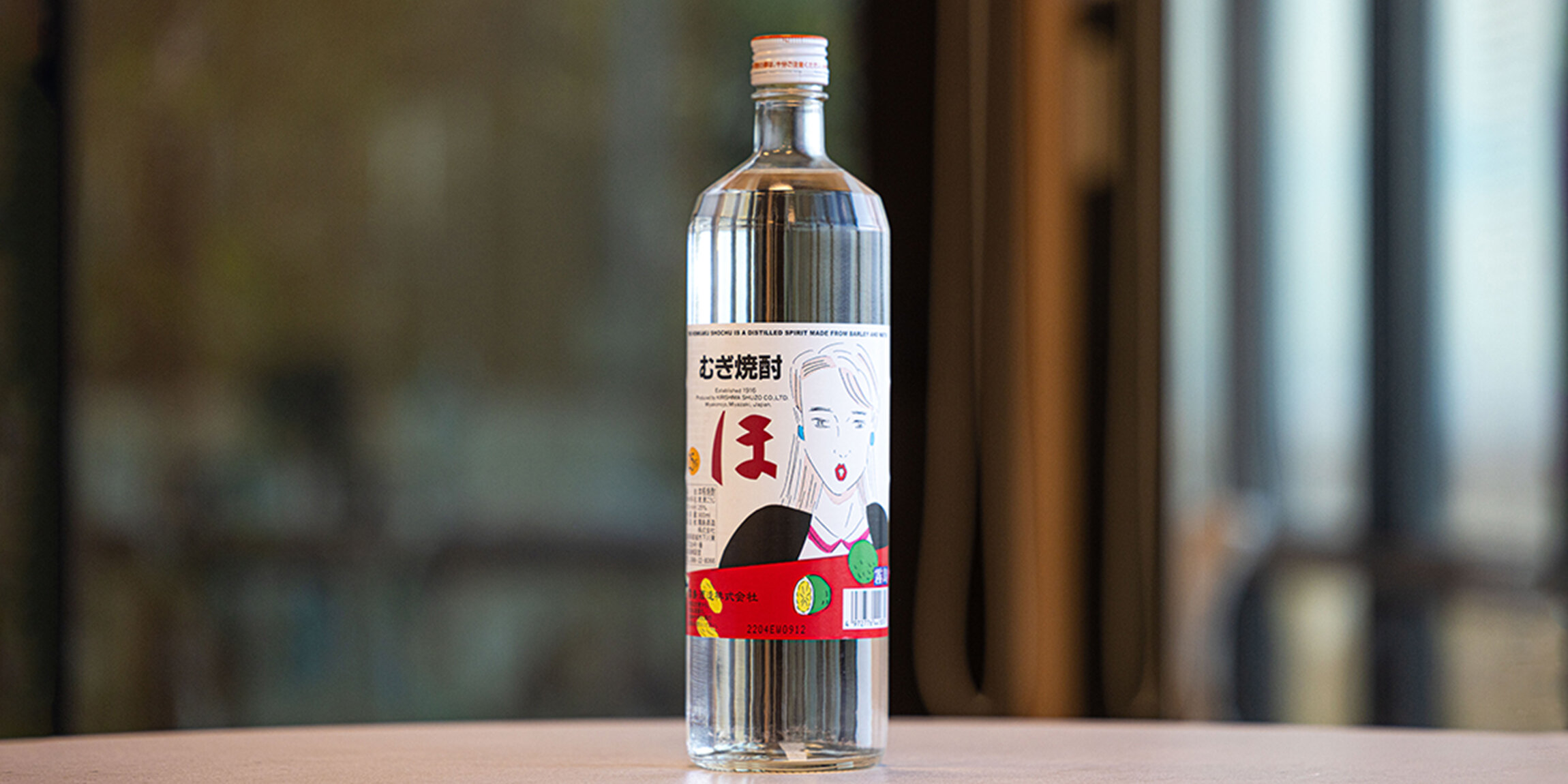
The renewal of barley shochu "Ho" triggered the development of new barley shochu and rice shochu, made with the company’s proven skills in sweet potato shochu production.
After careful consideration, the company decided to proceed with development, aiming for a flavor that would allow users to experience the natural flavor of the ingredients, as the existing barley shochu and rice shochu are generally easy-to-drink products yet suppress the characteristics of the ingredients.
>Read Part 1
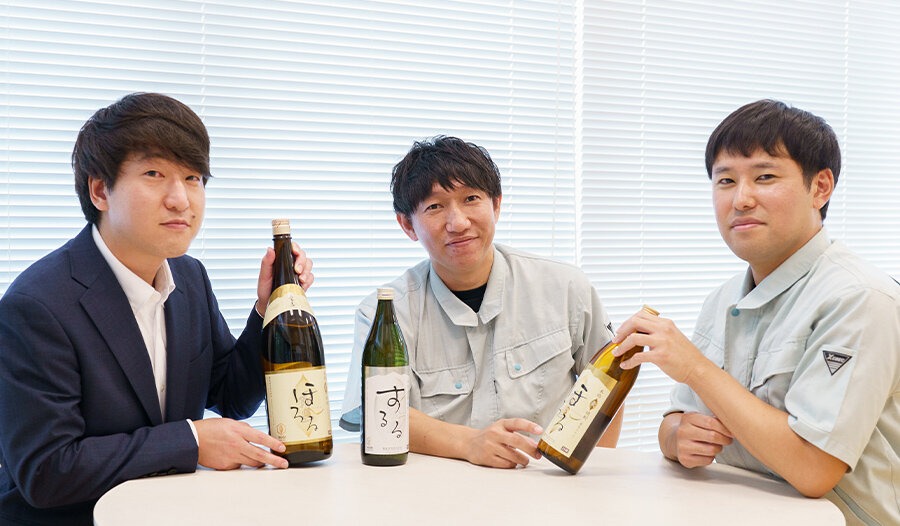
Two people from Research and Development Department were at the center of the development of the shochu quality: Masahito Onishi for barley shochu, and Sho Setoguchi for rice shochu.
One area that required much trial and error was the selection of yeast to be used in shochu.
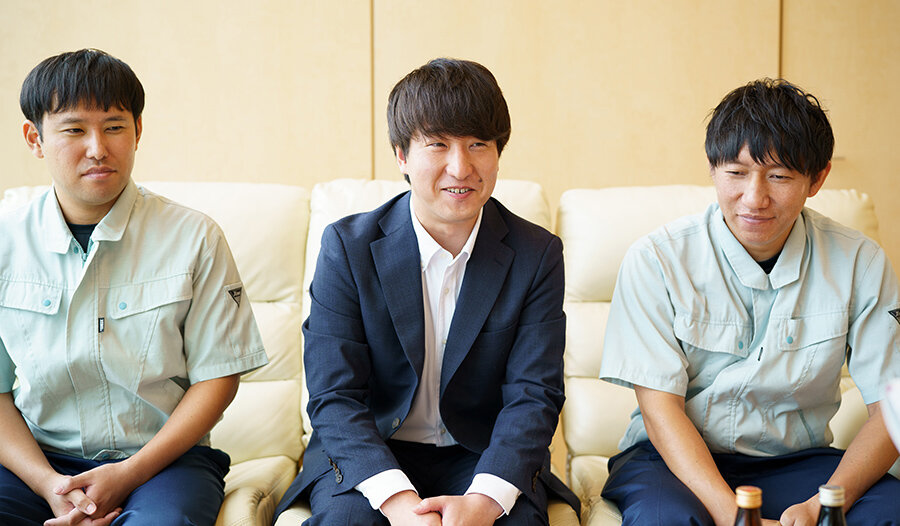
"Among the yeasts we have studied for use in sweet potato shochu, we repeatedly tested and selected the ones that were best suited to this barley shochu," says Onishi, who is in charge of developing "Honkaku Mugi Shochu Kirishima Hororu."
There is a wealth of information on yeast that has been researched in the development of sweet potato shochu to date. In addition, if necessary, the team goes out to coasts and flower fields to collect various yeasts found in nature, which are then selected and cultivated to be suitable for shochu fermentation. Finding the perfect yeast for the desired flavor is a time-consuming and painstaking task.
The team also puts a lot of effort into adding the fragrant aftertaste of the barley used as the raw material. Particular attention was given to the distillation method and blending of the raw liquor. During the distillation process, the pressure inside the still affected the aromatic components. Could this be used to an advantage?
"Reduced pressure distillation is often used for lighter flavors, while normal pressure distillation is often used for richer flavors. This time, I wanted to create something that was light to drink but still had a strong barley aroma, so I decided to produce two types of raw liquor, one distilled under reduced pressure and one distilled under normal pressure, and blend them," says Onishi. This blend ratio achieved the ideal flavor.

"Honkaku Kome Shochu Kirishima Sururu" is made only from "Fuwari Gemmai" (brown rice) which is the raw ingredient for sweet potato shochu "SUZUKIRISHIMA"*" and "Kirishima Rekkasui."
In widely distributed rice shochu and sake, in order to bring out the gorgeous fruity aroma, rice that has been polished to a high degree by scraping the surface is often used. On the other hand, the characteristics of "Fuwari Gemmai" is the sugar layer of bran which is deliberately left intact.One of the nutrients contained is what gives it its deep aroma when distilled under heat.
By using yeast, the sweet, melon-like fruit aroma was maximized, while focusing on how to retain the flavors of "Fuwari Gemmai."
*"Fuwari Gemmai" is a name unique to Kirishima Shuzo.
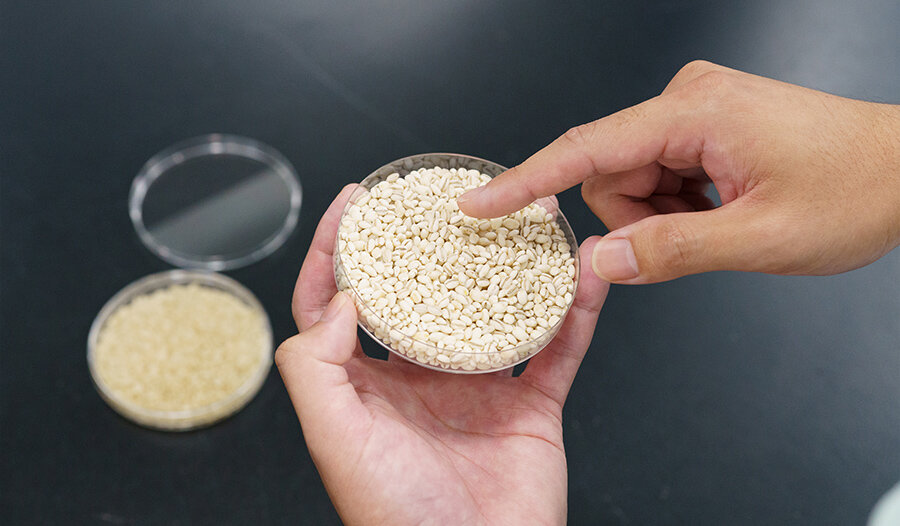
"In addition to the ingredients such as 'Fuwari Gemmai,' koji, and yeast, we also paid particular attention to our method, which led to many challenges in the manufacturing process," recalls Setoguchi, who is in charge of developing "Honkaku Kome Shochu Kirishima Sururu."
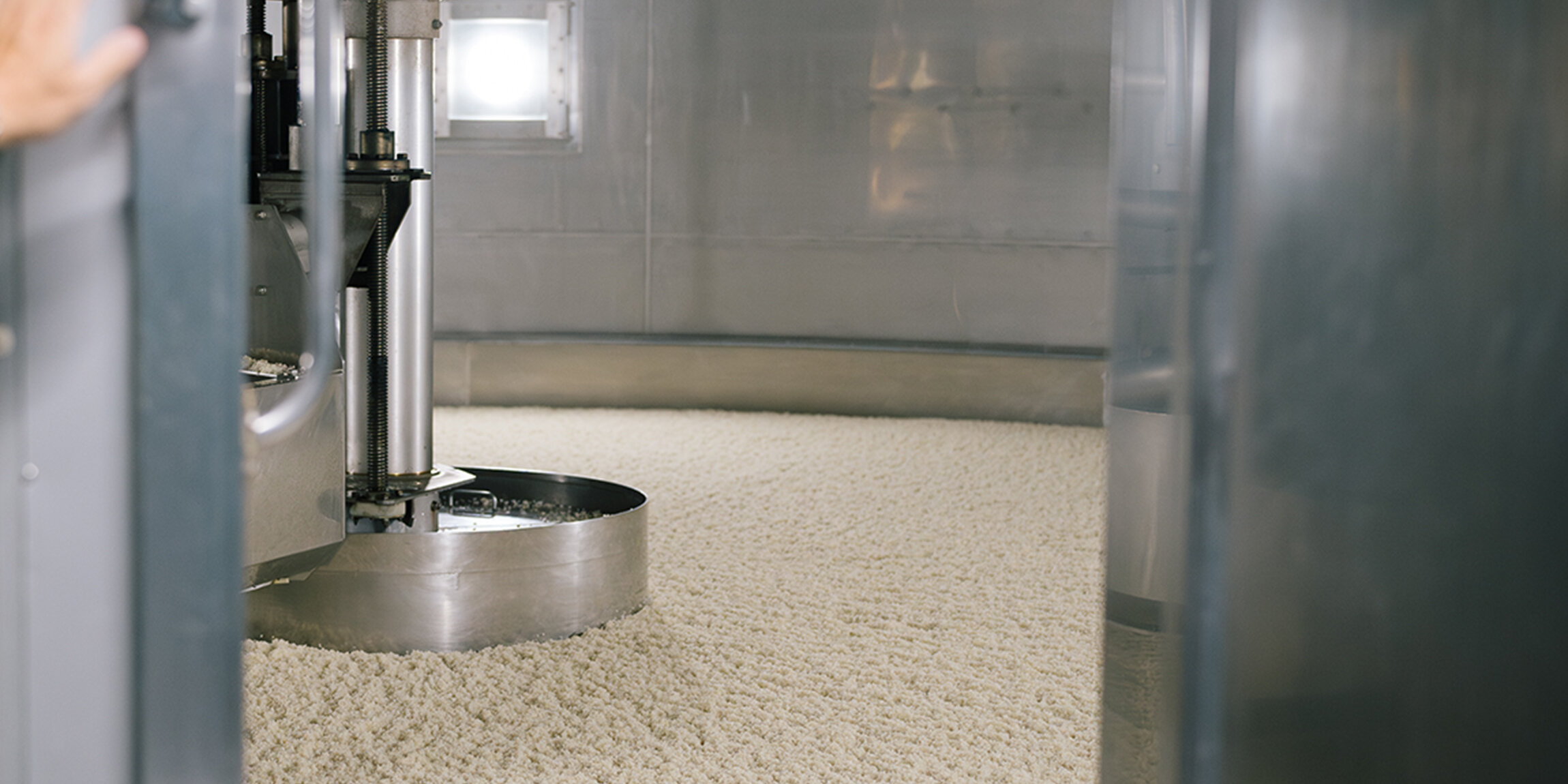
The large factory had to perfectly reproduce the same quality and flavor as the prototype created in the lab, which combined a gorgeous fruity aroma with a lingering rice finish. There were numerous meetings with the production staff and repeated adjustments were made to the degree of rice steaming, the fermentation temperature of the mash, and the filtration conditions for the raw liquor.

The know-how cultivated in making sweet potato shochu is also reflected in the packaging.
The name uses onomatopoeia that emotionally expresses the taste and the feelings one has when drinking it.
"We considered words that evoke a sense of nature, such as wind and calm, but we felt that direct expressions would not adequately convey the nuances and characteristics of this product," says Oiwa from the Planning Department.
From 4,000 and 5,000 onomatopoeic and mimetic words that is said to exist, the team found perfect words that suited each product.
For the label design, the team considered several designs that would best express the onomatopoeic name. The fact that the team was able to accomplish the difficult task of deciding on the name and design comprehensively, rather than separately, is a unique skill at Kirishima Shuzo, cultivated through its tradition of "taste meetings*."*."
*Meetings held when Kirishima Shuzo creates a new product.
Read the article about the taste meetings herehere
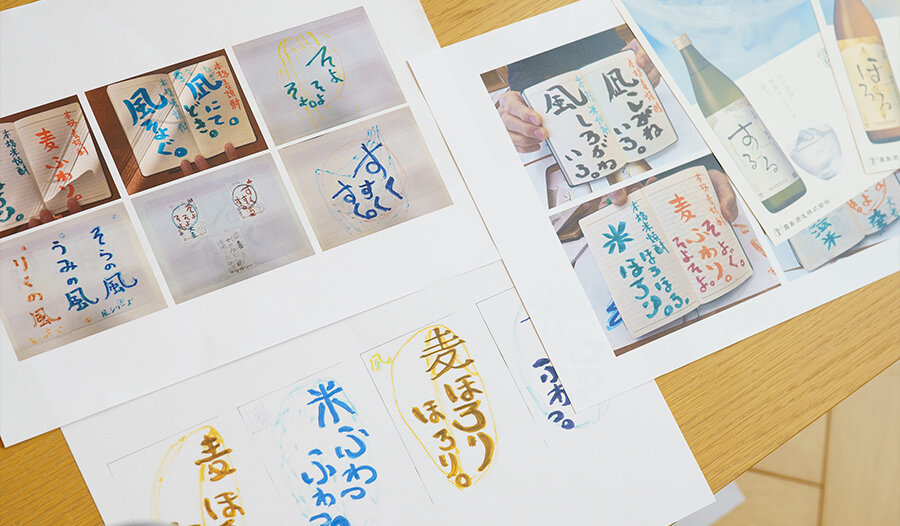
Immediately after its release, many people inside and outside the company expressed surprise at the name, which was different from previous Kirishima Shuzo products. Now, the nickname "Horo Suru," which combines the two products, has been born and loved.
"It makes us happy when we hear customers say, 'It has a fruity aroma and is easy to drink,' and 'It tastes just as the name suggests,'" the three say proudly.
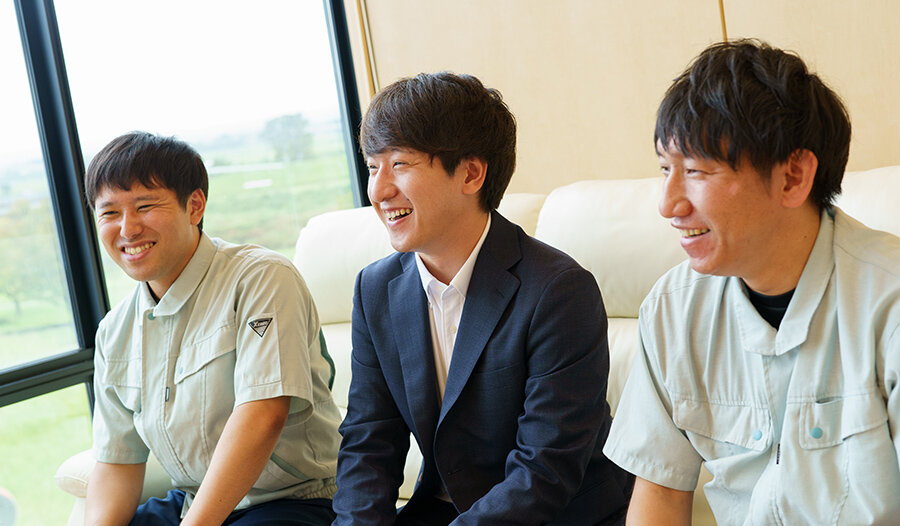
One year after the major undertaking of developing the first barley shochu and rice shochu in approximately 20 years, Oiwa spoke about his future plans.
"I think that 'Kirishima Hororu' and 'Kirishima Sururu' have become products that allow customers to experience a new side of Kirishima Shuzo. From now on, we would like to continue to create challenging products that are unique to Kirishima Shuzo, and that are not bound by conventional frameworks, using potatoes, barley, rice, or any ingredient."
Even if you usually drink sweet potato shochu, why not try "Honkaku Mugi Shochu Kirishima Hororu" and "Honkaku Kome Shochu Kirishima Sururu" today? They will surely create a warm moment that will make your heart melt in "Horo" and "Suru" way.



*Please refrain from sharing alcohol-related information with those under 20 years old.

- ハッシュタグから
Interesting articlesSearch for