The basics and the profound. The world of "koji production" where the potential of shochu is explored.
Automation ahead of its time and meticulous research.
Unraveling Kirishima Shuzo's journey through "koji production."
"Koji research is really mundane."
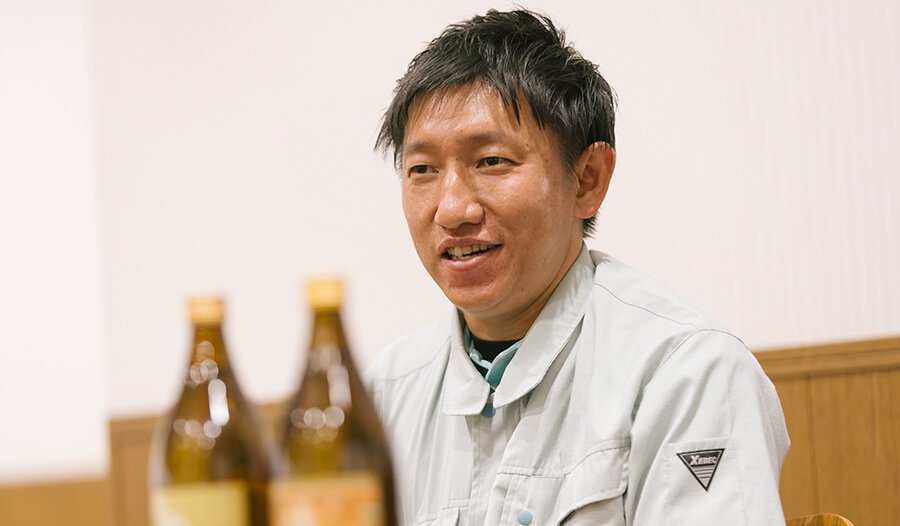
This is what Sho Setoguchi Sho from Research and Development Department says with a wry smile.
Japan is heavily influenced by the Asian monsoon*, when humid air originating in the Indian Ocean flows in through Southeast Asia, and a culture of fermented foods has developed that makes use of the unique microorganisms that have developed in this climate.
*Monsoon refers to the seasonal winds. In a broader sense, it also refers to the rainy season that accompanies the seasonal winds.
Among these, koji mold is Japan's " National Fungus" (certified by the Japanese Society for Brewing Science in October 2006), and is so important in sake brewing that it is said to involve "first koji, second moto, third brewing."
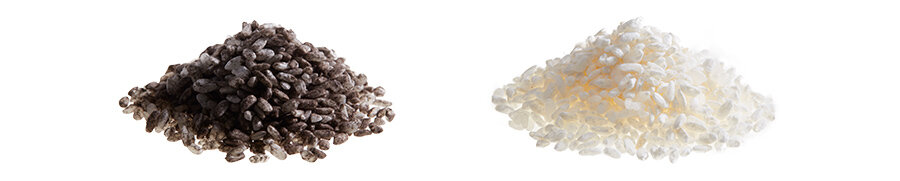
The koji used in shochu production are mainly black koji and white koji.
Taking Kirishima Shuzo's products as an example, Kuro Kirishima, made using black koji, is known for its crisp taste, while Shiro Kirishima, primarily using white koji, is associated with a softer flavor. However, Setoguchi notes that surprisingly, in terms of flavor profile, the difference between the koji types isn't that significant.
Of course, koji does make a difference, but the taste is largely determined by the ingredients such as sweet potato, barley, and rice, and the yeast that converts the sugar produced when the koji breaks down the starch into alcohol.
Setoguchi says that when selecting koji for product development, the deciding factor is its compatibility when combined with the ingredients and yeast. By using koji that is a good match, it is possible to maximize the desired aroma and flavor. While koji is an absolutely essential foundation for shochu production, it also serves to bring out the best in the ingredients and yeast.
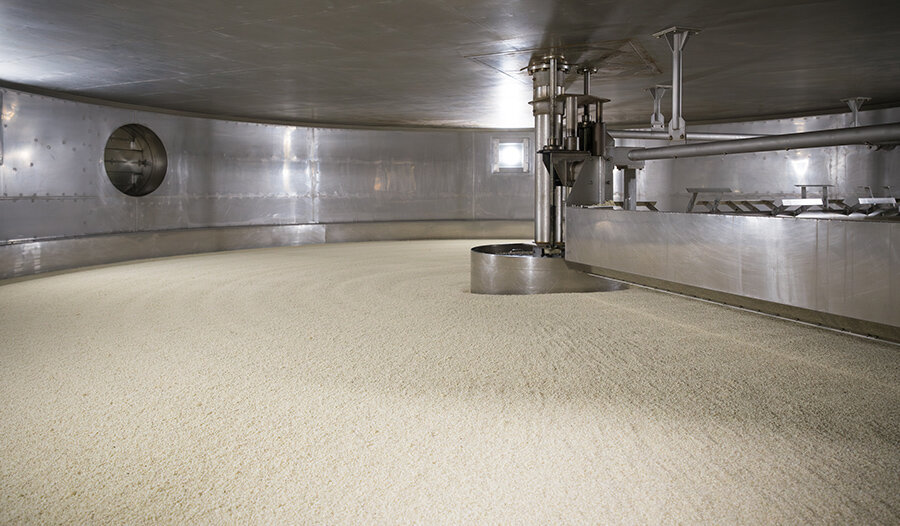
Approximately 80 tons per day. There aren't many manufacturers that make koji from this amount of rice.
One reason Kirishima Shuzo grew into a company capable of handling this volume was its early commitment to factory automation.
The previous president, Junkichi Enatsu, was an avid fan of machines, and shortly after taking office in 1949, he abolished the toji system and promoted the modernization of the factory. The culmination of Junkichi's passion for technology was the introduction of an automatic koji-making machine at Shibita Factory, completed in 1986, which fully automates the process of sprinkling koji seed on steamed rice to make koji, and in 1991 Headquarters Factory was also automated.
That's how long they've been trying to automate koji production.
Hitoshi Sakurai of the Manufacturing Division, who also experienced the days when much of the work was still done by hand, says:
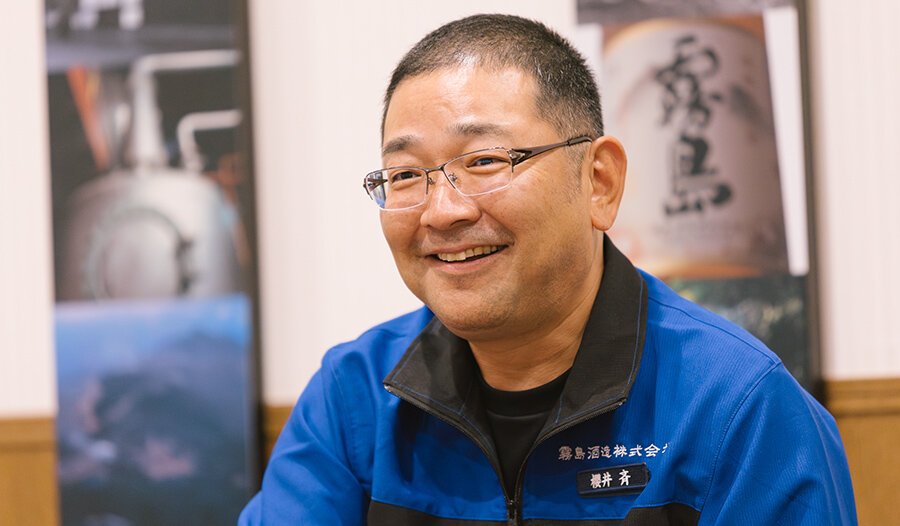
"At the time, there was a job called the night shift, where people took turns monitoring and caring for the koji throughout the night, and we looked after the koji with our own hands and eyes."
Since the automatic koji-making machine was introduced, the quality difference between operators has disappeared, and it has become possible to produce uniform, high-quality koji throughout the year.
However, mechanization and automation do not mean that people are no longer needed.
"Shochu should be made with all five senses," says current president Yoriyuki Enatsu.
See, touch, taste... it is checked using human senses. Machines only perform the work.
The Manufacturing Headquarters uses a quiz format in which employees actually taste koji and guess its acidity to train the palates of young employees who have little experience in the manufacturing field.
"Anyone can do an analysis and check the numbers. However, if you can immediately notice something is wrong with your five senses, without having to wait several hours for the analysis to come out, you can deal with it. No matter how much technology advances, I believe that the skills and attitude to value human senses, which cannot be measured by numbers, are necessary to be responsible for the production at Kirishima Shuzo," says Sakurai.
The recently launched "SUZUKIRISHIMA" is a product that embodies the passion of Research and Development Department and the Manufacturing Headquarters in koji making.
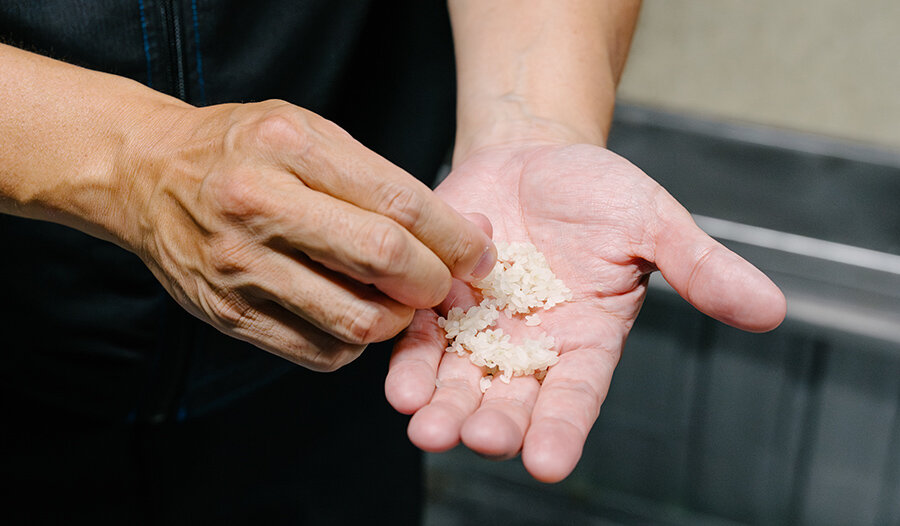
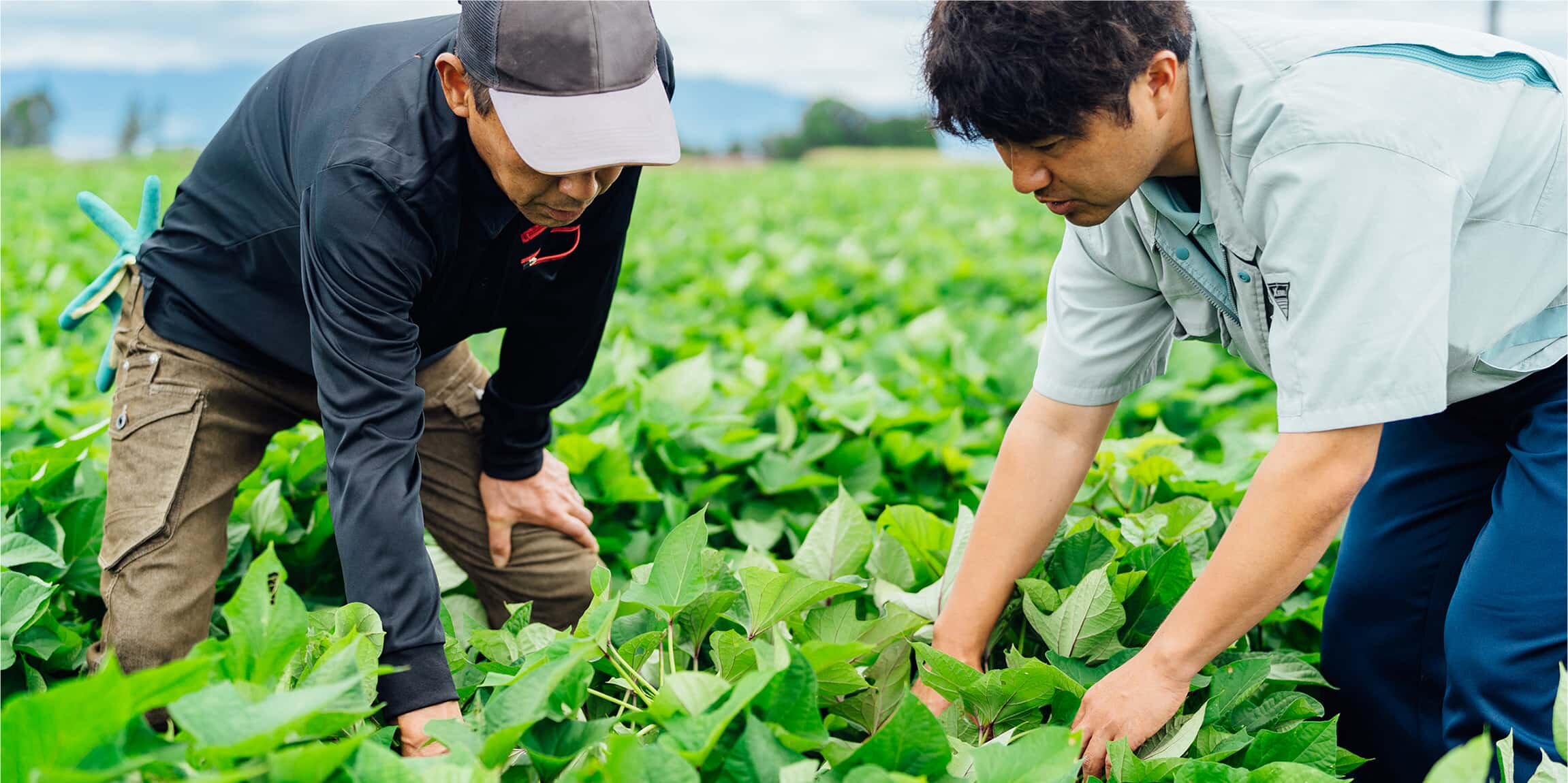
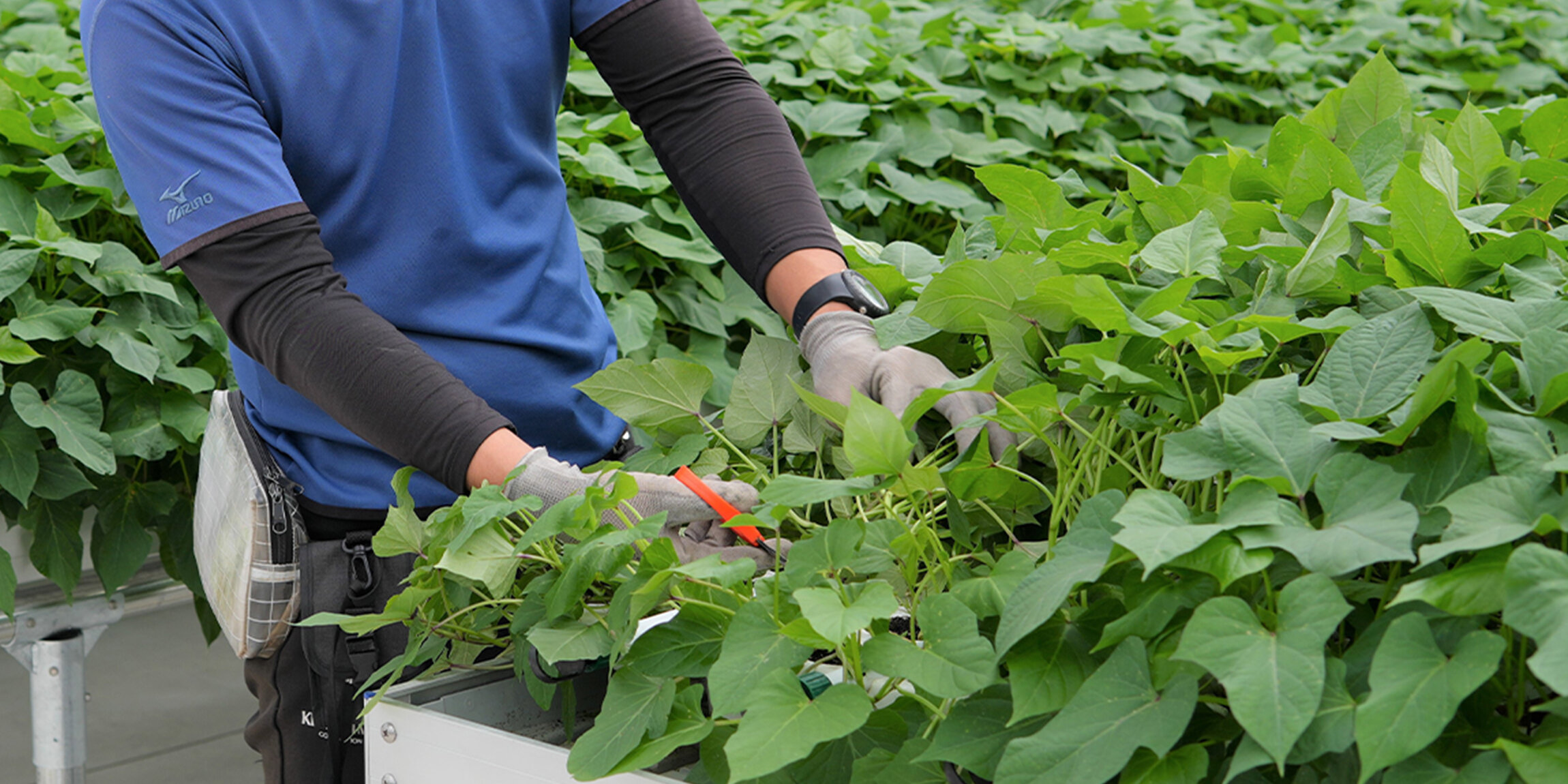
Our proprietary "Fuwari Gemmai (brown rice)*"is optimally polished brown rice, and is a new koji ingredient characterized by its complex and deep aroma due to the components contained in the bran layer. By combining it with the main ingredient, a new variety of sweet potato called "Suzukogane," and the uniquely developed "Aerial Yeast*" it achieves a light yet deep flavor.
* Names unique to Kirishima Shuzo
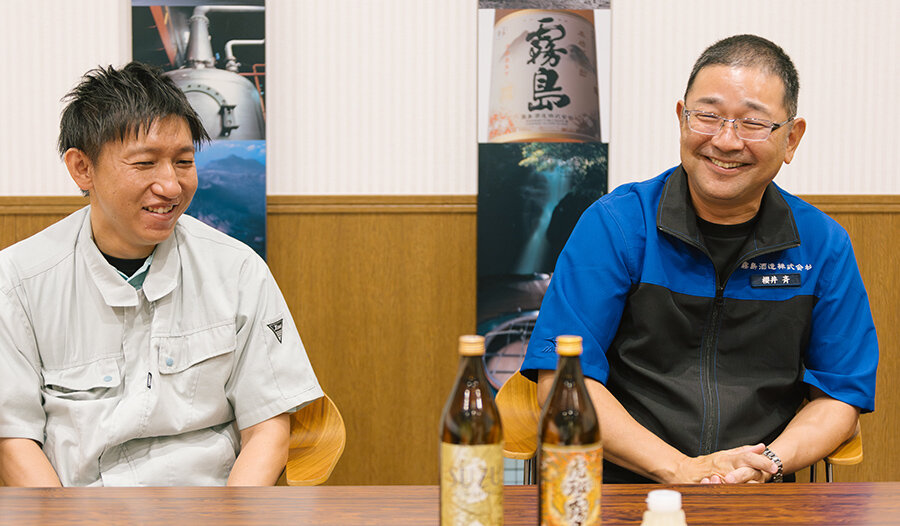
"When I first heard about Fuwari Gemmai, I was a little confused and thought, 'What? Are you serious?'"
Sakurai said with a laugh, "Usually, the rice used to make koji is thoroughly polished. To do it with brown rice, we had to completely rethink the soaking, water absorption, and steaming processes, which are all very important in koji making."
Even if it was successful in the lab, doing it on a scale of several tons using actual equipment requires strict and detailed adjustments, so they worked with the Research and Development Department through trial and error to adjust the temperature and time.
New koji requires the evolution of manufacturing technology. The Manufacturing Division does its best to meet even the most difficult orders.
"Koji is one of the cultural assets that Japan is proud of around the world. By honing our koji making skills, we hope to create products that are loved all over the world."
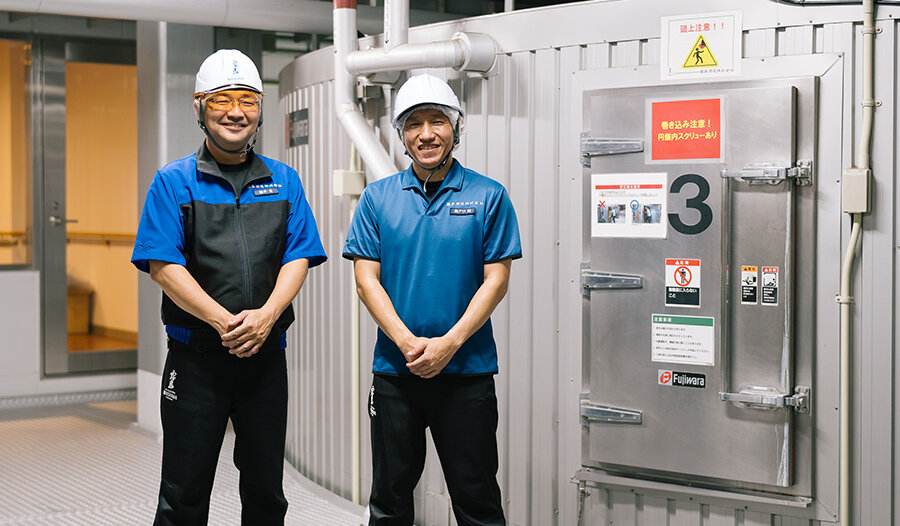
The Research and Development Department explores new koji and expands the possibilities of shochu.
The Manufacturing Headquarters utilizes inherited techniques and keen senses to improve the quality of koji and production efficiency.
The two pillars that support Kirishima Shuzo's koji production continue to explore the profound world of koji today in order to deliver happy moments to customers.



*Please refrain from sharing alcohol-related information with those under 20 years old.

- From hashtags
Interesting articlesSearch for