A Sapling Today, a Forest in Ten Years, and the Roots of Shochu in a Century
Nurturing tomorrow’s moments of relaxation:
Kirishima Shuzo’s long view on the future of its community and nature.
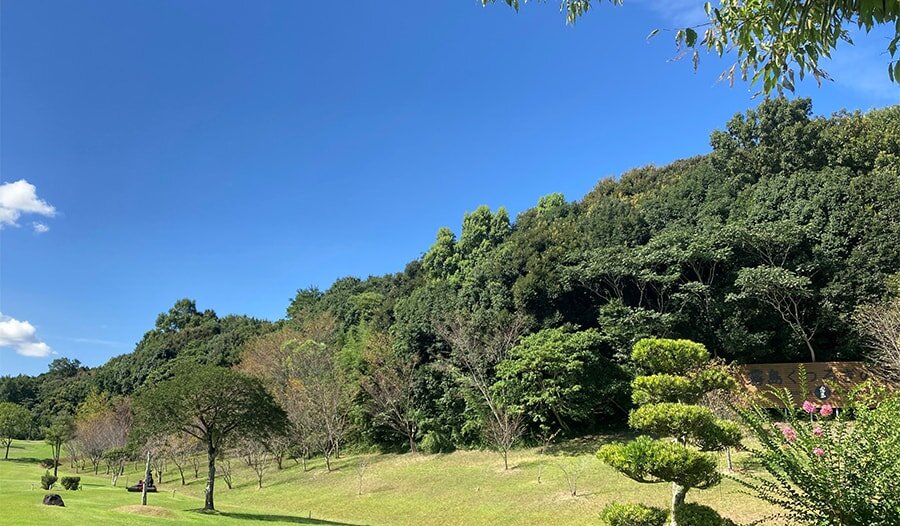
Trees nestle together on a hilltop where a gentle breeze blows through. The forest, where zelkova, sawtooth oak, persimmon, chestnut, and other trees grow abundantly, creates a nostalgic and warm landscape.
"Kirishima Kutsurogi no Mori" is a precious forest that Kirishima Shuzo has been cultivating through years of working with nature in its production of Shochu.
"We never imagined that we would be involved in forestry instead of Shochu."
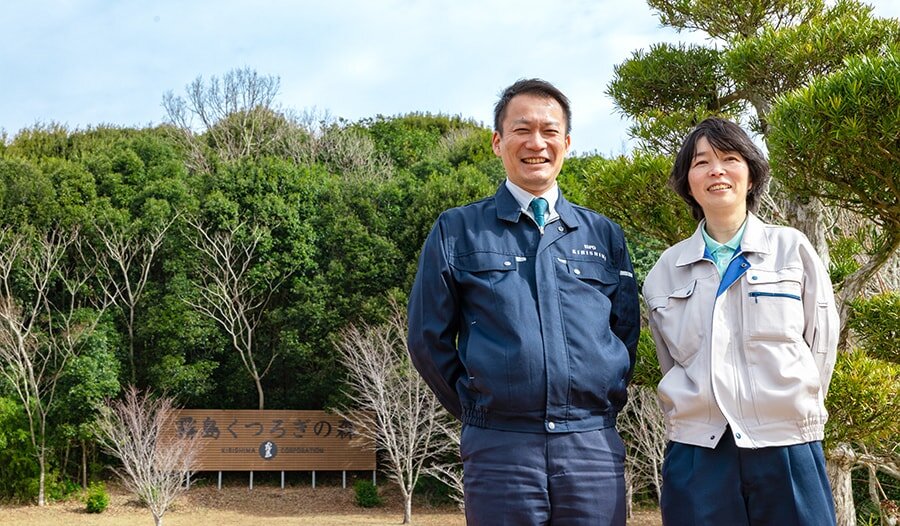
These are the words of Shingo Fukushima from the Occupational Safety Promotion Office and Hitomi Minayoshi from the Green Energy Division, who are involved in forest conservation activities as main members of the “Kirishima Kutsurogi no Mori” project.
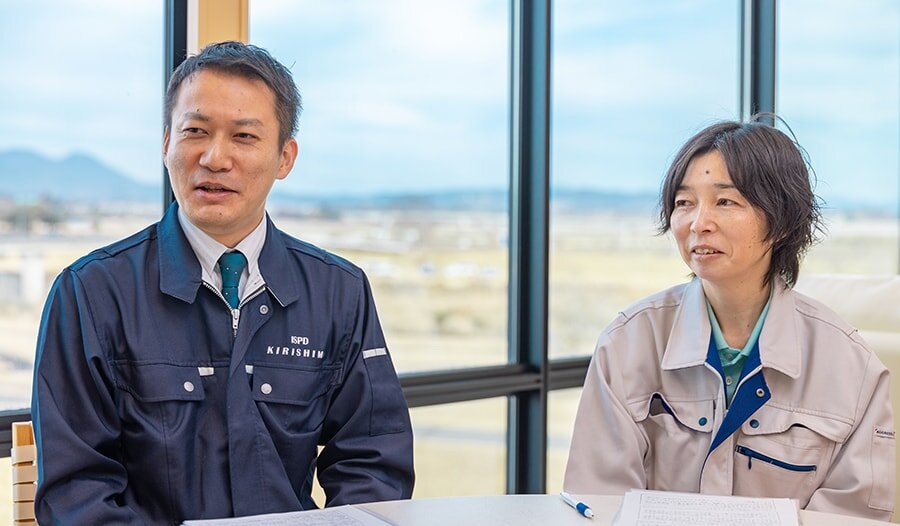
In 2010, Kirishima Shuzo participated in a project in which companies created their own forests, as promoted by Miyazaki Prefecture. This project utilizes the rich natural environment of Miyazaki Prefecture and allows companies to participate in forest conservation activities. Kirishima Shuzo leased approximately 6 hectares of municipal forest in Miyakonojo City and began planting trees. The site was named "Kirishima Kutsurogi no Mori." In 2024, a new site of approximately 1 hectare was rented as Site No. 2, an expansion of "Kirishima Kutsurogi no Mori."
First of all, why is Kirishima Shuzo, a liquor manufacturer, engaged in forest conservation activities?
This is because shochu cannot be produced without respect for the natural environment.
"We make Shochu using the bounty of nature, such as sweet potatoes, water, and rice. We believe that working to protect the environment is an important step in making sustainable shochu, while also showing our gratitude to the local community and nature," says Minayoshi.
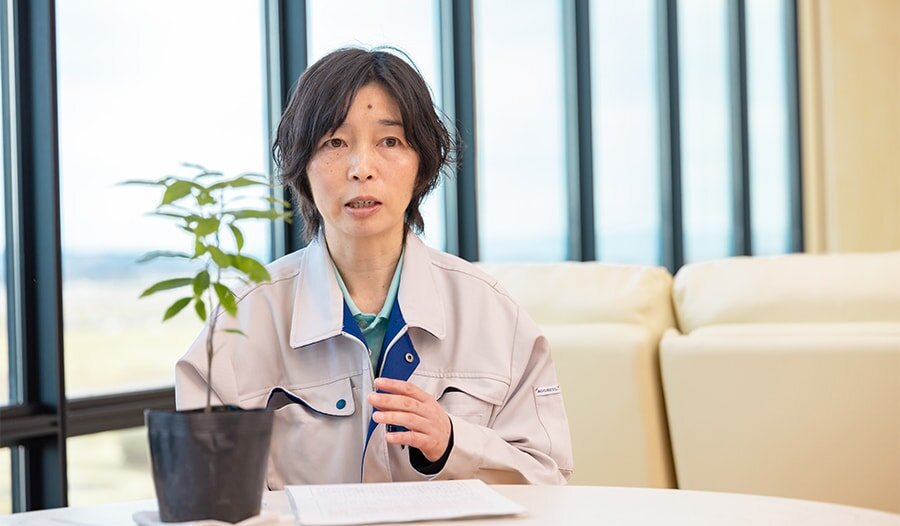
Fukushima, Minayoshi, and other members of the “Kirishima Kutsurogi no Mori” project began considering the second site in 2020, the 10th anniversary of the start of forest creation at the first site. Alongside their regular work, they continued to carry out unfamiliar tasks such as searching for potential sites to rent, selecting trees to plant, and arranging for saplings.
"We had little knowledge about forest creation, so with the cooperation of the Miyakonojo Shinrin-Kumiai (forestry cooperative), we proceeded by trial and error, one step at a time. Selecting the candidate site took a particularly long time. We carefully selected from among many candidate sites, taking into consideration the infrastructure needed for forest creation and safety," said Fukushima.
Minayoshi says that in order to coexist with the local community, the team also paid attention to the landscape views once the forest had grown.
"We chose Japanese maples and oaks so that when the forest grows, local residents can enjoy the colors of the seasons, and so that when they enter the forest, they can experience its joys such as autumn leaves and nuts."
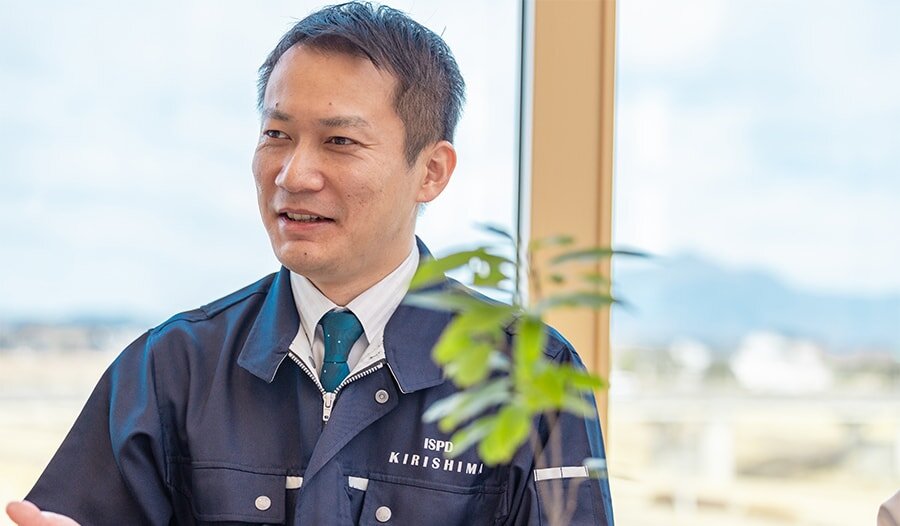
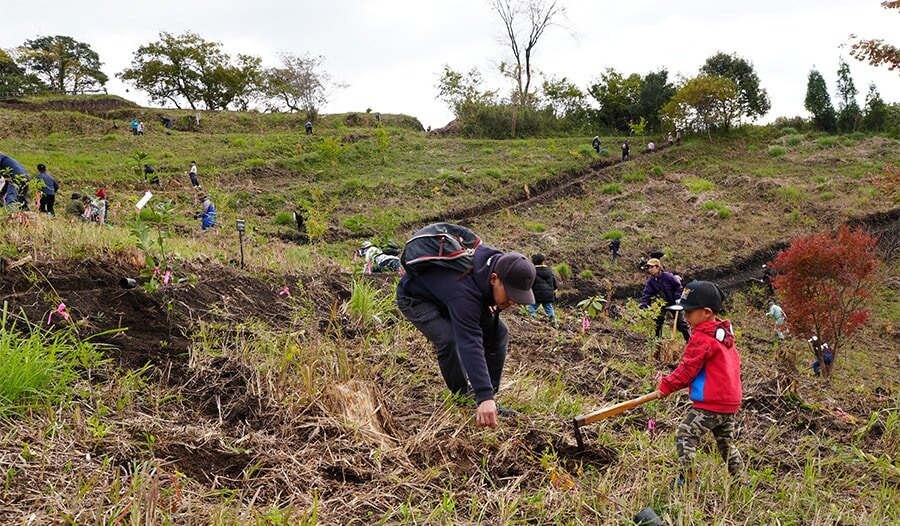
Regarding tree planting, which is the main part of forest creation, the company has promoted raising awareness of forest creation throughout the company by hosting tree planting events that employees and their families can participate in. The first tree planting event at Site No. 2 was held in November 2024, with 111 people participating and planting approximately 2,500 saplings.
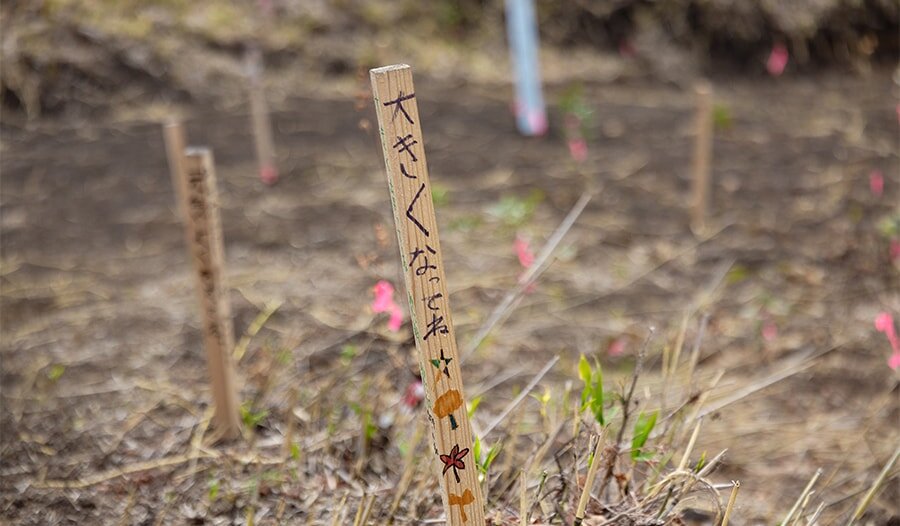
"Organizing the tree planting event was a lot of work, but we received feedback from participants saying it was a good experience for the children. Hearing that makes us feel that it was worth the effort," said Fukushima. In fact, stakes with colorful messages written by the children are lined up next to the saplings as markers, testifying to the enjoyment of the event.
Kirishima Kutsurogi no Mori also regularly holds nature learning events for children, such as authentic nagashi somen noodles using bamboo and craft experiences using fallen leaves and nuts.
"We believe that providing opportunities for children to interact with nature and learn the importance of environmental protection is also a form of forest conservation."
This is not the only forest conservation activity at Kirishima Shuzo.
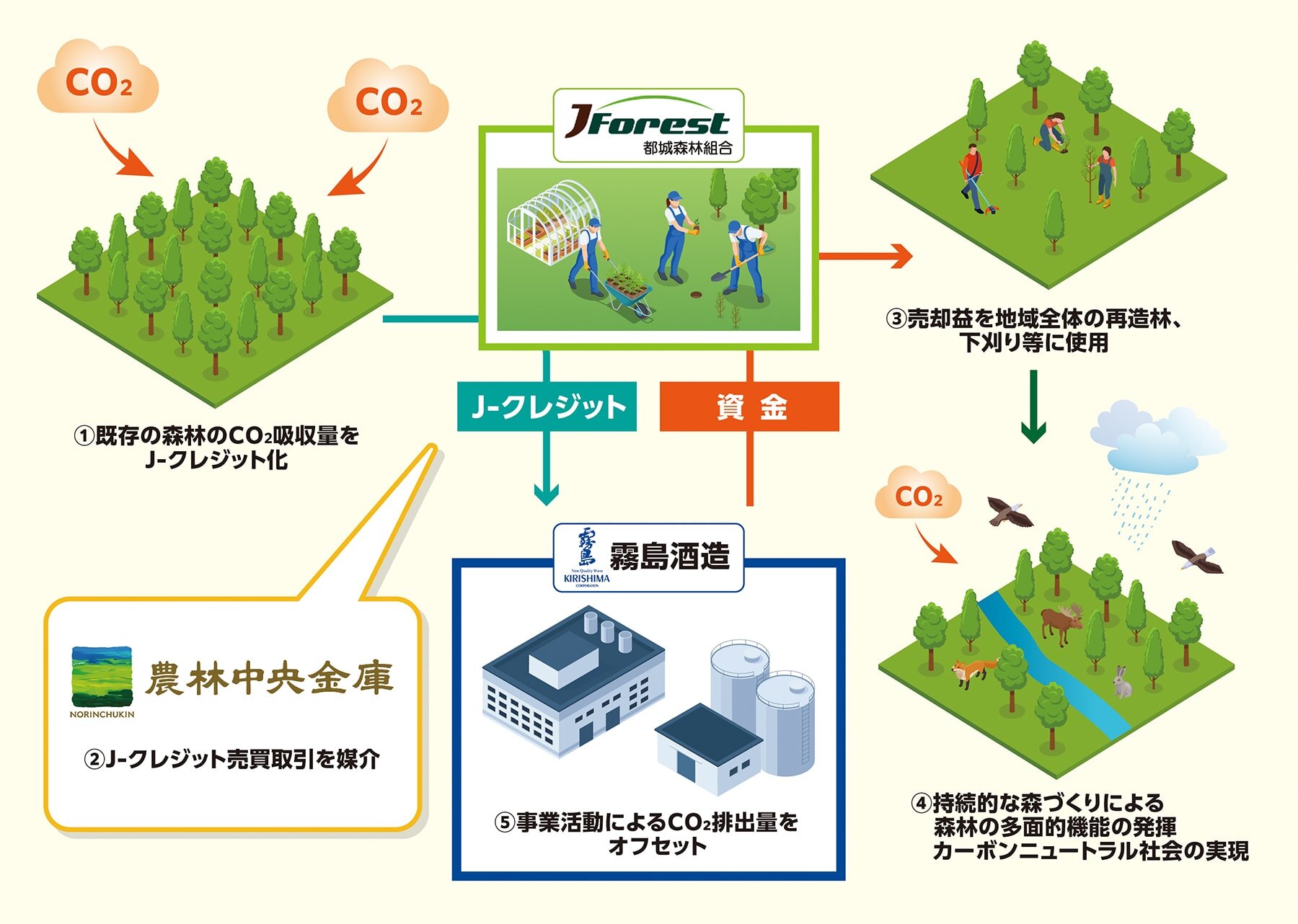
Kirishima Shuzo supports the NPO “Donguri 1000-nen no Mori wo Tsukuru Kai” (association to create a 1,000-year forest of acorns), which has been active since 1997, and has participated in its tree-planting events since 2004. In 2024, Kirishima Shuzo, Miyakonojo Shinrin-Kumiai, and the Norinchukin Bank, signed a "Collaboration Agreement on the Use of J-Credits for Forest Development in the Miyakonojo Region." Under this agreement, Kirishima Shuzo will purchase J-Credits to cover the CO₂ reduction effect absorbed by forests in Miyakonojo, and this will not only be used for corporate carbon offsets, but also for sustainable forest development in the Miyakonojo region.
"In recent years, a nationwide issue has been the increasing number of forests that are not reforested after logging due to factors such as the aging of forest owners and the burden of expenses and labor. Although the activities we are primarily involved in are small, we thought that by utilizing J-Credits we could contribute even a little to forest conservation in a wider area in the region, and so we entered into a partnership agreement," said Minayoshi.
Kirishima Kutsurogi no Mori No. 1 site was planted in 2010, and now, 15 years later, it has finally become a lush forest.
"It takes time for shochu to become a product. But reforestation takes even longer before you can see the forest growing. We believe that this activity will definitely contribute to forest conservation, and ultimately to the future of the region, so we would like to continue expanding the forest," Fukushima and Minayoshi say, their eyes filled with anticipation.
Saplings were just planted on Site No. 2 in 2024. The mountainside is still exposed, but they will surely play an important role in supporting Kirishima Shuzo's shochu production in the future.
This forest, where gratitude for nature and hopes for the future are rooted, will increasingly enrich its appearance as Kirishima Shuzo continues on its journey.



*Please refrain from sharing alcohol-related information with those under 20 years old.



- ハッシュタグから
Interesting articlesSearch for