What was once a "barren land" was a "land of blessings" for sweet potato Shochu.
The Shirasu plateau nurtures and refines it.
Exploring the reasons why southern Kyushu became a major production area for sweet potato shochu.
In 1916, more than 100 years ago, Kirishima Shuzo took its first step in its long history, and has continued to produce shochu for generations.
But did you know that the production of shochu is supported by a "foundation" that nature has created over many more years?
It is the shirasu plateau, which has shaped the way of life, food culture, and even the very process of shochu production in Miyakonojo.
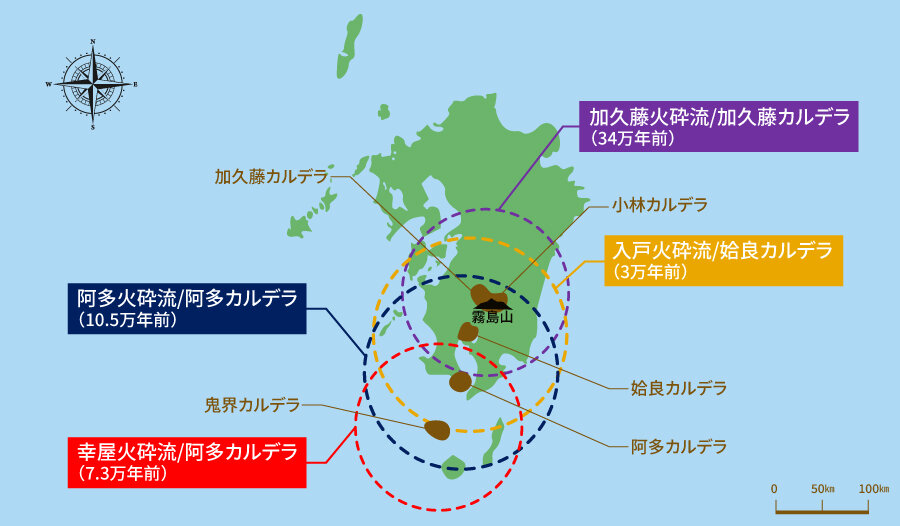
This southern Kyushu region, including Miyakonojo, is a land where people have lived in harmony with volcanoes.
Many volcanoes are distributed in the surrounding area, and each time these mountains erupt, pyroclastic flows and volcanic ash have covered the entire southern Kyushu region. It is said that the ash from the Aira eruption 29,000 years ago reached as far as the Kanto region. These layers of sediment, accumulated over tens of thousands of years, have formed the unique geological features of this land, known as the shirasu plateau.
Volcanoes must have been a major threat to the people living in this area. Furthermore, the shirasu plateau formed by them was unsuitable for rice cultivation because it had poor water retention and very little nutrients.
"Barren Land"
Southern Kyushu has long been known by that name.
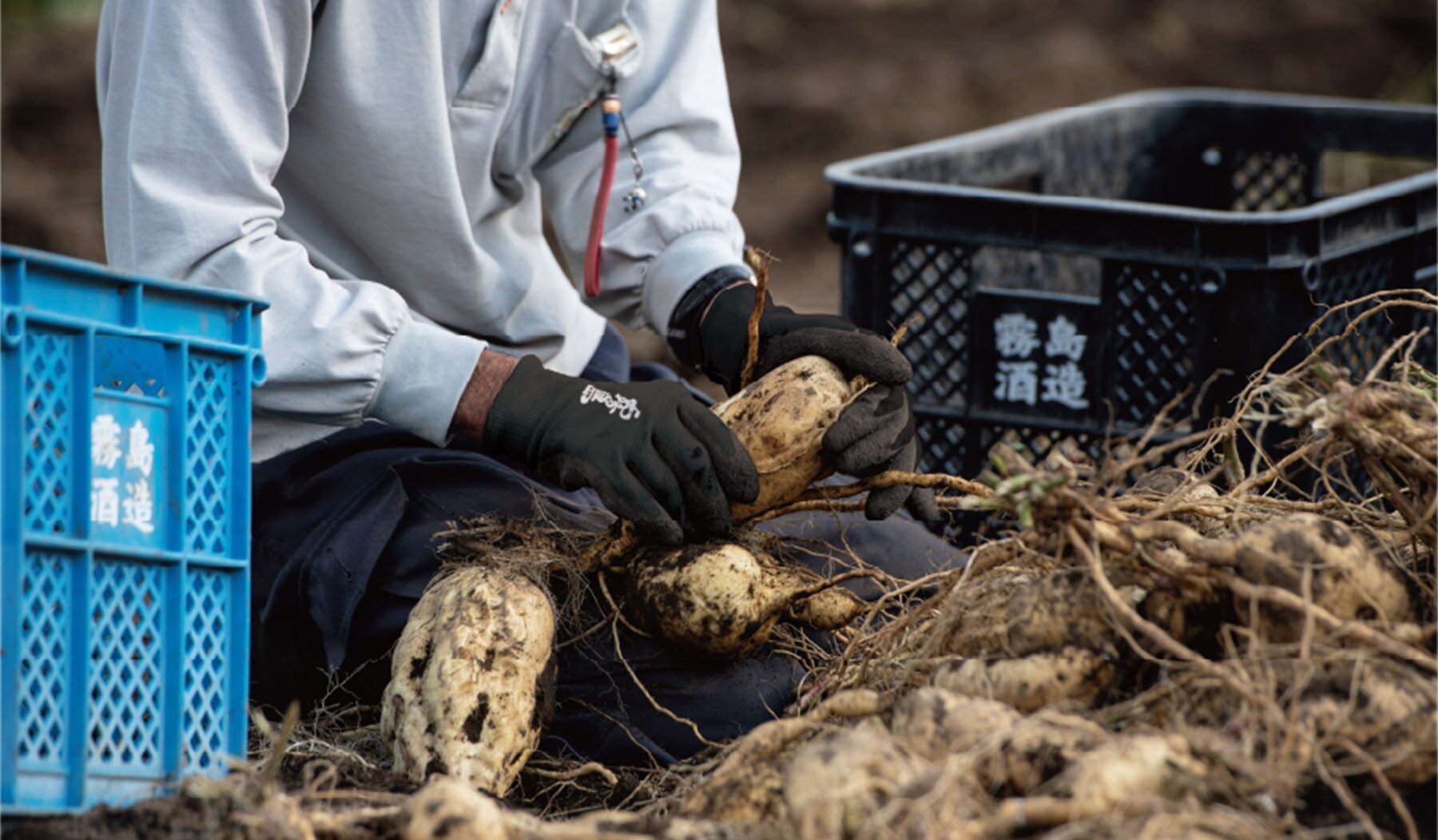
It was sweet potatoes, an essential ingredient for sweet potato shochu, that transformed that land into a "land of blessings."
Sweet potatoes prefer well-drained soil and will not grow properly if there is too much nutrient. They were a crop for which all the characteristics that had previously been considered disadvantages of the shirasu plateau became favorable conditions.
As a result, southern Kyushu became a major sweet potato producing region.
The blessings that the Shirasu Plateau provides are not limited to sweet potatoes.
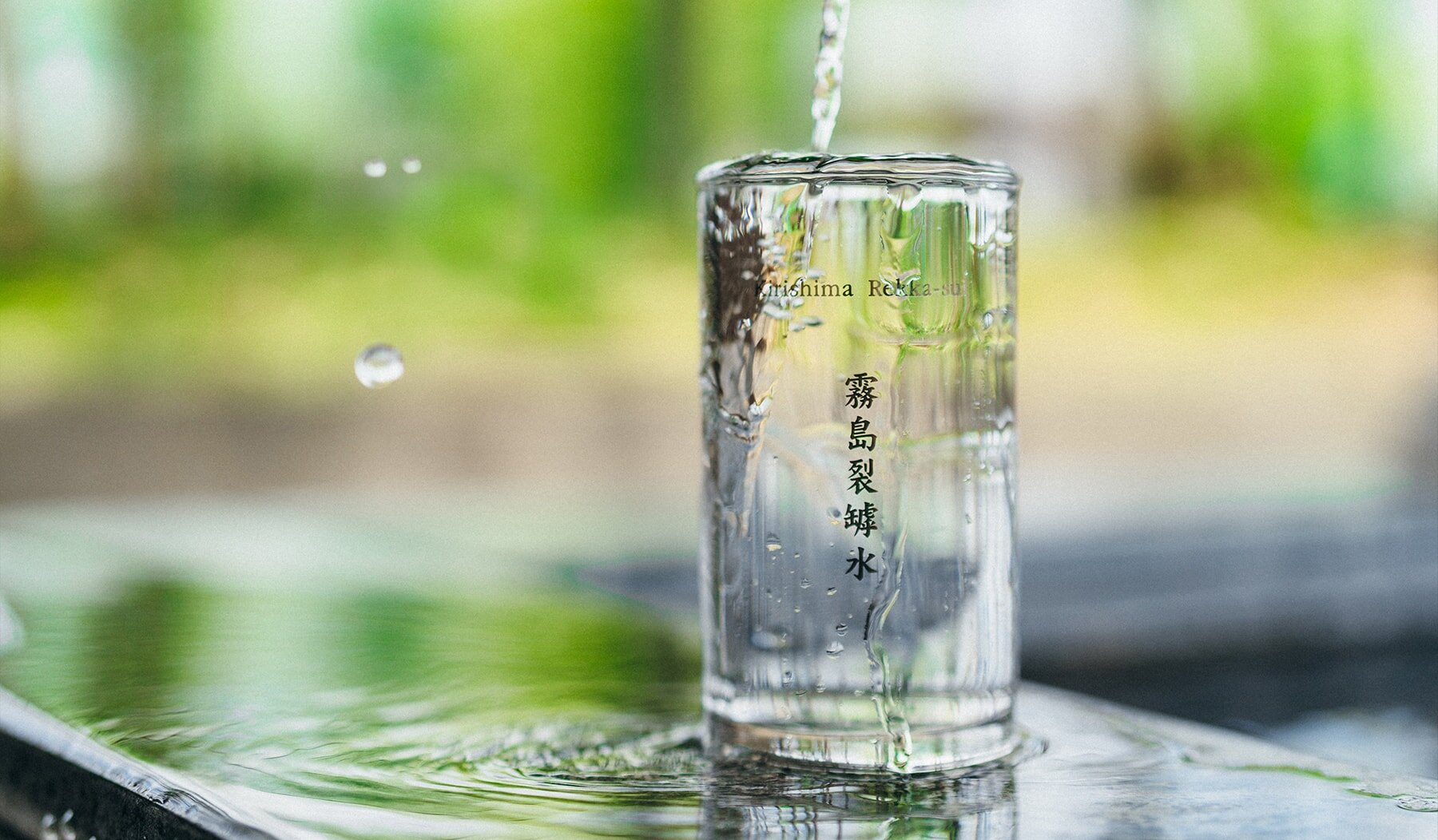
The Kirishima Rekka-sui (Kirishima fissure water) used in Kirishima shochu is one such example.
The Miyakonojo Basin, surrounded by the Kirishima Mountains and Wanizuka Mountains, stores abundant groundwater beneath its surface. Rain that falls on the mountains flows into the shirasu plateau. The shirasu plateau is formed from shirasu layers, volcanic ash soil, and clay layers, and over many years, rainwater passes through this "natural filtration system," removing impurities and becoming water with just the right amount of minerals.
"It has a pleasant mouthfeel and a subtle flavor. There is no better water for shochu."
It was the second-generation president, Junkichi Enatsu, who discovered the Kirishima Rekka-sui. When Junkichi realized that the water he had painstakingly dug was so perfectly suited for shochu, his joy must have been like groundwater gushing from the bedrock to the surface.
* Read more about the Kirishima Rekka-sui here
In addition to shochu production, Kirishima Shuzo uses shirasu in a variety of other ways.
At the KIRISHIMA WALK FACTORY, a Shochu Factory Tour facility, plaster art using shirasu as a material is displayed in the Geo Tower, providing visual enjoyment for visitors.
The soft, warm texture created by the shirasu gives the space a feeling of Miyakonojo's rich and warm nature.


Furthermore, at the Kirinokura Museum, themed around "Kirishima, the birthplace of sweet potato shochu," visitors are greeted immediately upon entering by a massive topographical model of the shirasu plateau. This three-dimensional diorama provides a panoramic view of the topography of southern Kyushu and the Miyakonojo Basin, shaped by volcanic activity, allowing visitors to experience the undulations of the terrain and the vastness of the shirasu plateau.
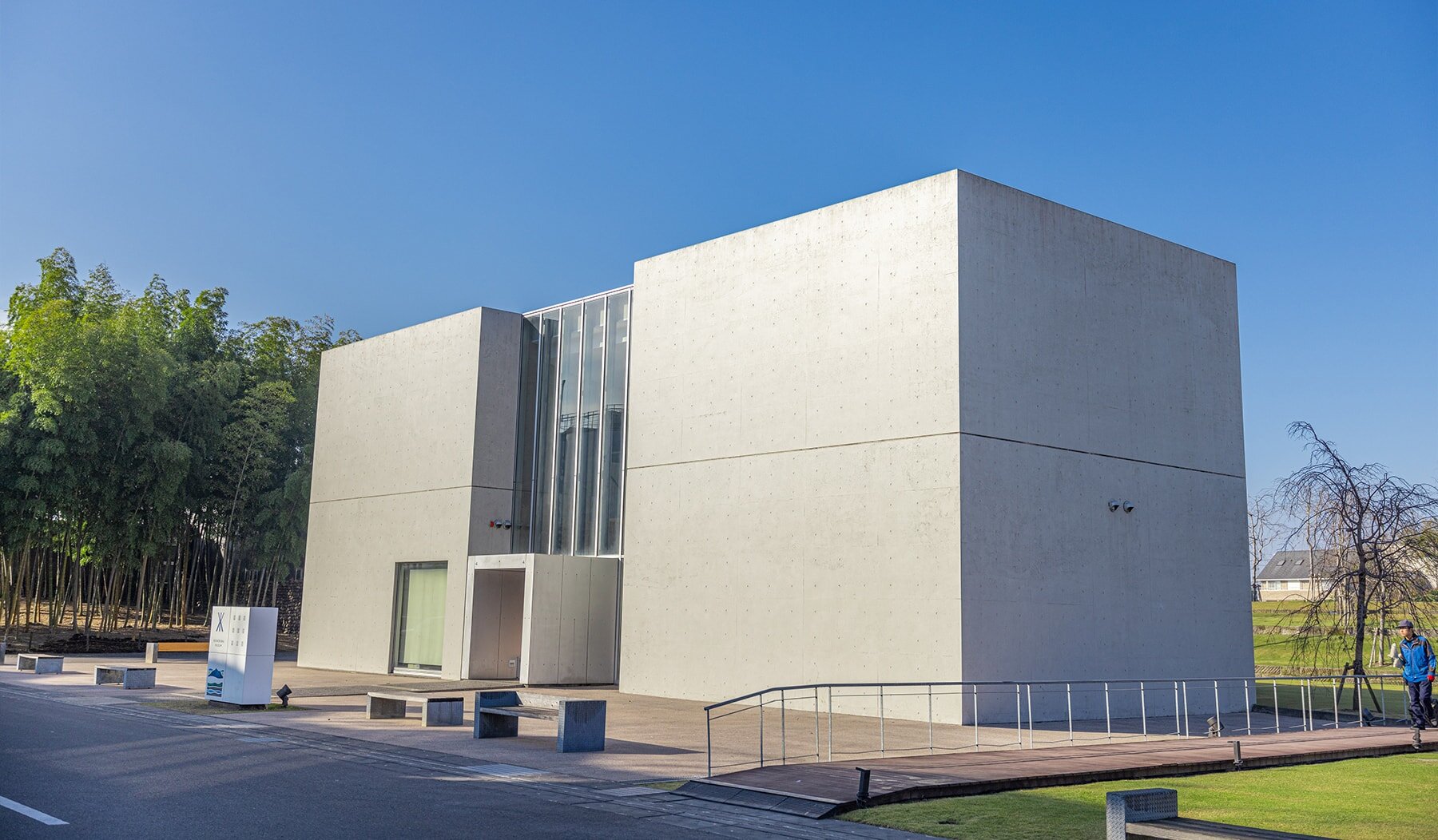
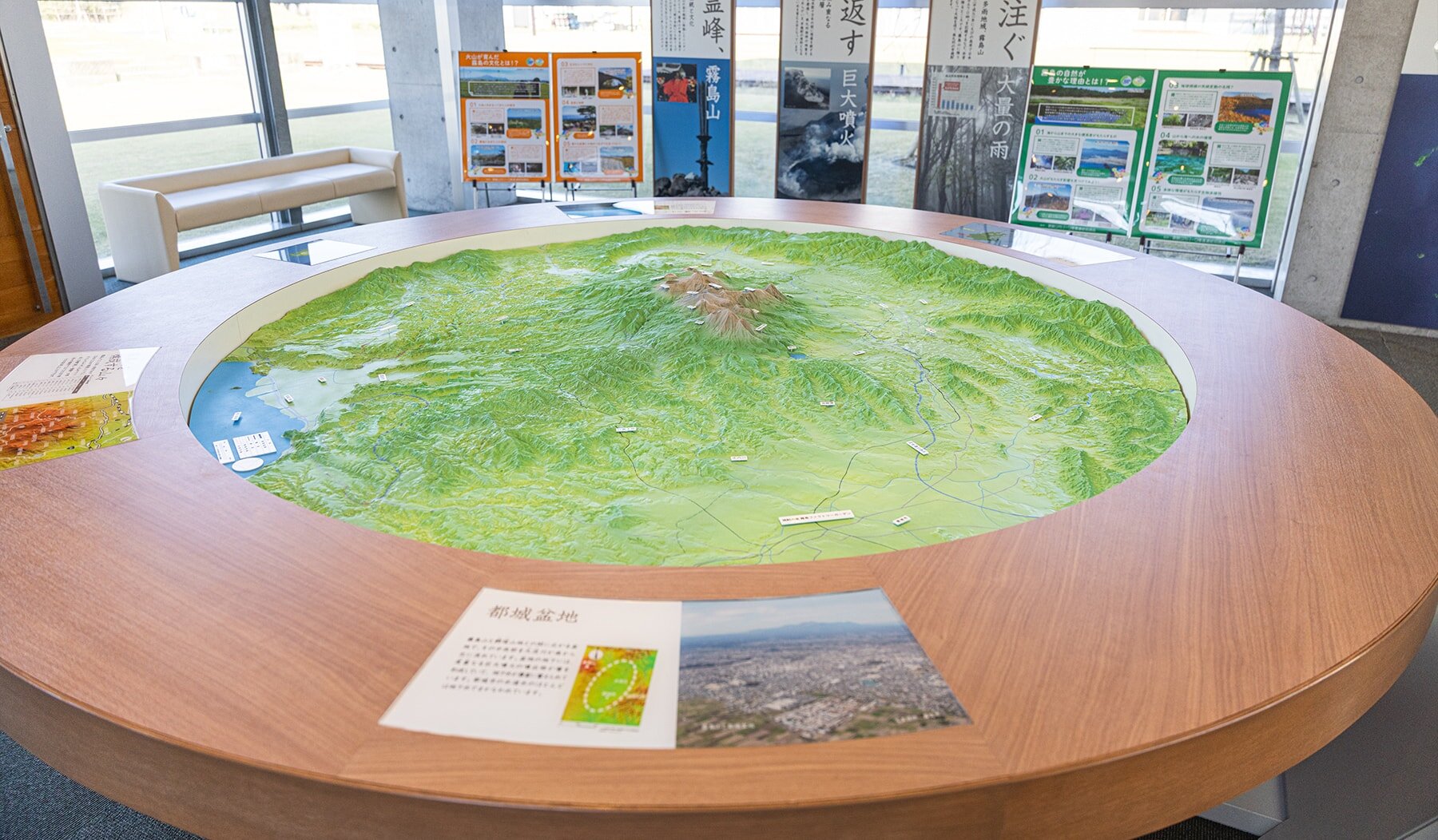
Further inside, you'll find a display of actual shirasu specimens. The name "shirasu" is said to originate from "white sand," and it looks exactly as you might imagine from its name: white, light volcanic ash particles, fine glassy sand, and pumice fragments. Why is the shirasu plateau called a "natural filtration system"? If you see, touch, and closely observe the real thing, you'll understand why.
Furthermore, regarding Kirishima Rekka-sui and sweet potatoes, which are ingredients for shochu, one can systematically learn about the mechanisms by which high-quality water and sweet potatoes are nurtured, from a perspective centered on the shirasu plateau.

Shochu we produce is not made solely by our own hands.
The miracles created by nature, stretching back to an incredibly distant past, and the stories of the people who have lived through them—that continuity, along with the best efforts of us living in the present, is what creates the flavor we experience today.



*Please refrain from sharing alcohol-related information with those under 20 years old.

- From hashtags
Interesting articlesSearch for