The journey to creating the flavor of "Kuro Kirishima." The backbone built on uncompromising passion.
The essence of sweet potato. The essence of "black."
What defines the uniqueness of "Kuro Kirishima," born from relentless pursuit?
It would be impossible to talk about Kirishima Shuzo without mentioning Kuro Kirishima. Its birth was so striking and a major catalyst for Kirishima Shuzo's rapid growth.
Approximately 30 years after its release, Kuro Kirishima has continued to be enjoyed widely for a long time. How was its flavor created?
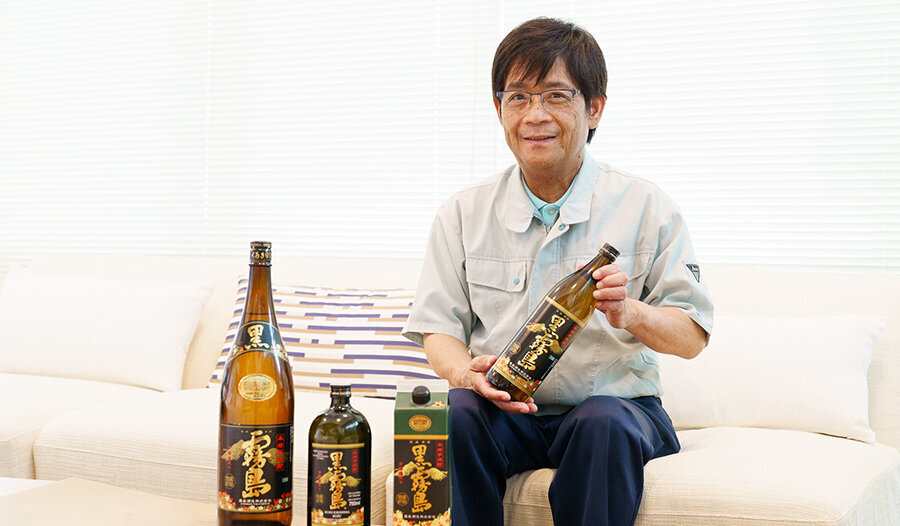
We spoke with Hironori Okuno of the Quality Development Division, who was a member of the development team at the time and inherited blending techniques from the company's second-generation president, Junkichi Enatsu.
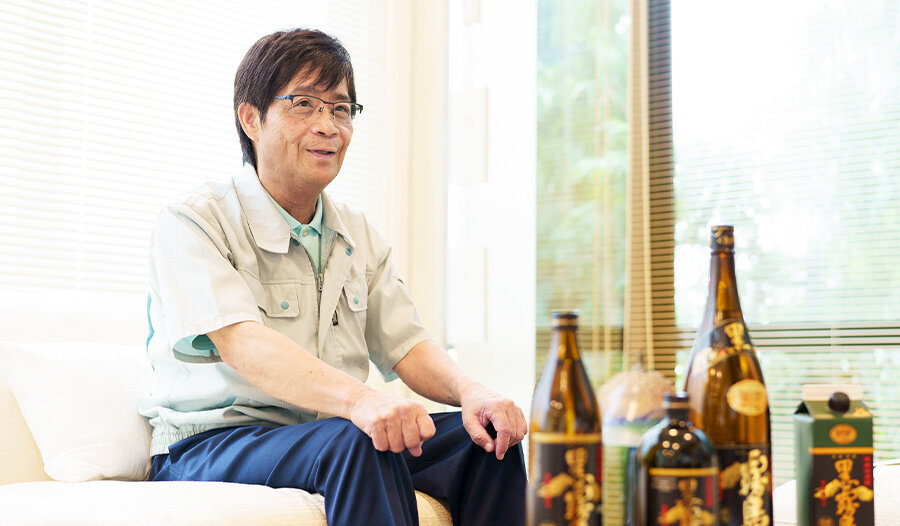
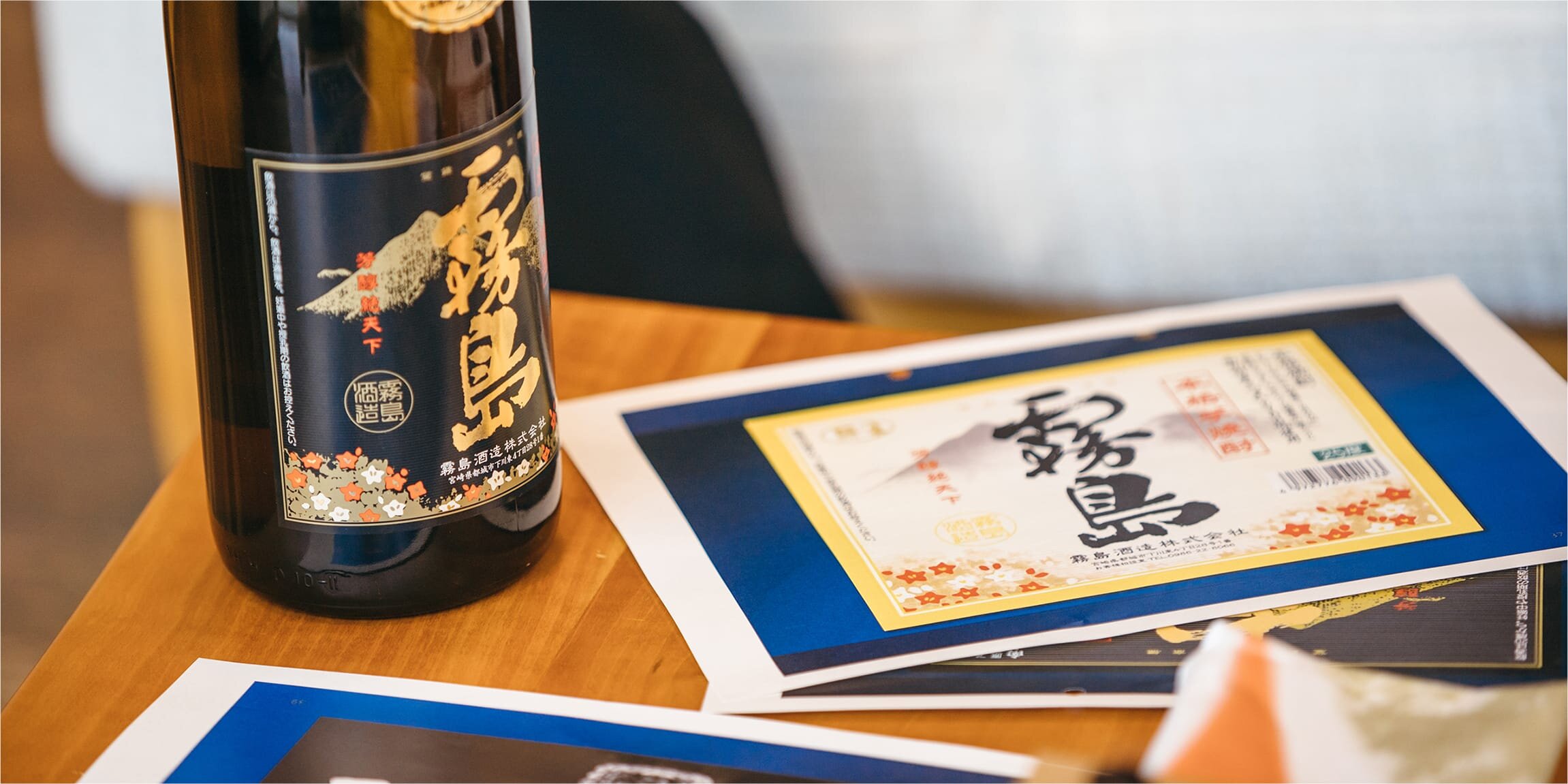
It was Takuzo Enatsu who was in charge of product development at the time and former Managing Director and Representative Director, who first suggested, "Let's make a black shochu."
At the time, the market was booming with the popularity of "black products" such as black sesame and black vinegar. The shochu industry was crowded with competitors, and there was a sense of crisis that growth was stagnant. With this as a backdrop, the company shifted course from primarily producing white koji shochu to developing sweet potato honkaku shochu made with black koji.
"I never heard about it directly, but I heard that there were many voices of opposition at meetings attended by senior executives*1," Okuno recalls.
Moreover, the only two members responsible for the flavor were Okuno, who was in the Research and Development department at the time, and his boss.
Regarding the taste, Takuzo and the sales staff conveyed a request for shochu with richness and sweetness.
"Our flagship product, Kirishima *2had a relatively strong sour taste, which was probably due to the influence of acetic acid derived from yeast. With the new product, we focused on eliminating the sourness and on developing a flavor that was particularly conscious of the balance of sweetness, umami, and roundness—the very indicators emphasized by the president before last, Junkichi."
*1 Related episode can be foundhere
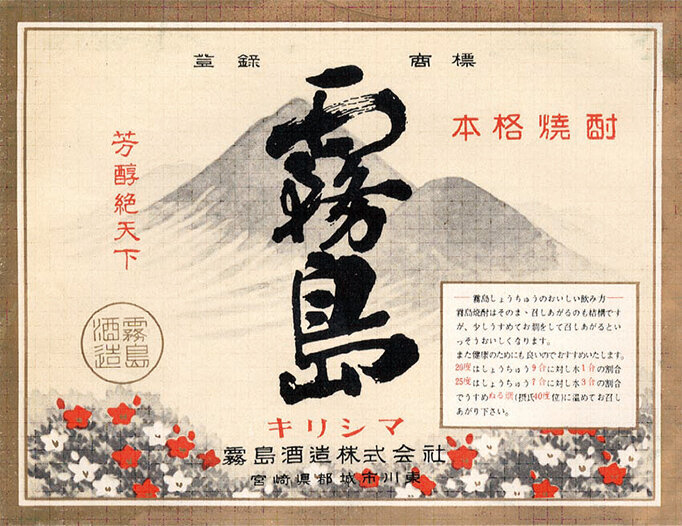
*2 Originally released as "honkaku shochu Kirishima" in the early days of the company's founding, sweet potato honkaku shochu was relaunched as "Shiro Kirishima" in 2015.
The most difficult part was selecting the koji and yeast.
Even though it is made with black koji, the taste of the base spirit changes depending on the characteristics of the koji itself, the combination of koji and yeast, and the balance of the ingredients. There are infinite possibilities, but on the flip side, there are many that do not taste as expected. It was a process like an incredible treasure hunt, where you had to find the right answer from among them. The things and passion inherited from Junkichi were a great help to Okuno in creating this flavor.
One of them is a collection of samples of various black koji shochu spirits that Junkichi experimented with. Based on his belief that "quality is the greatest service," Junkichi continued to pursue the perfect flavor until the very end, leaving behind a huge collection of samples.
"Without this, development would have taken much longer," Okuno recalls fondly.
The other factor was the "Passion" that Okuno learned from Junkichi for over 10 years, starting when he was a new employee. This became the guiding principle for development.
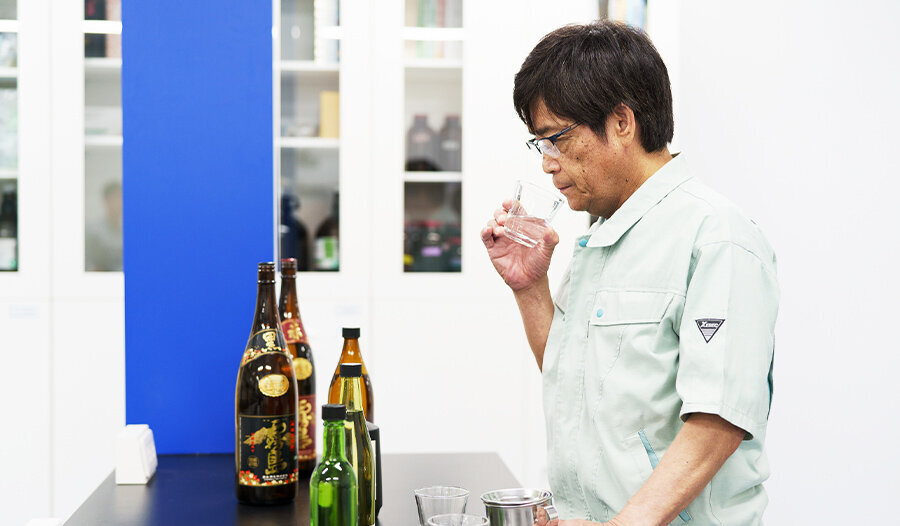
"President Junkichi would often say, 'A true blender is someone who can tell the differences as small as one in a thousand,' and he was a man who refused to compromise. I followed his advice and, over the two years I worked on developing Kuro Kirishima, tested around 100 different blends a day, eventually changing the composition by just a few percentage points, repeatedly examining the results."
Junkichi's teachings also come in handy when it comes to determining the right balance of ingredients.
"President Junkichi's philosophy was that even if there were some imperfections, it was to prioritize a good balance of sweetness, umami, and roundness. 'A class full of good students is no fun. A class with a variety of personalities, including mischievous and quiet kids, is more interesting.' In other words, blending base spirits with a variety of personalities brings out fullness and depth in the flavor. He focused on blending to enhance strengths rather than fix minor imperfections. This philosophy has been passed down to successive blenders."
Meanwhile, Takuzo visited distilleries in Tanegashima Island that make traditional shochu using black koji. This helped him clarify the ideal flavor he had in mind, and upon returning to Miyakonojo, he immediately shared it with Okuno, asking him to "improve this direction." The feelings he had been entrusted with overlapped with the flavor Okuno and his team were pursuing, and after three months of fine-tuning, "Kuro Kirishima" was finally completed.
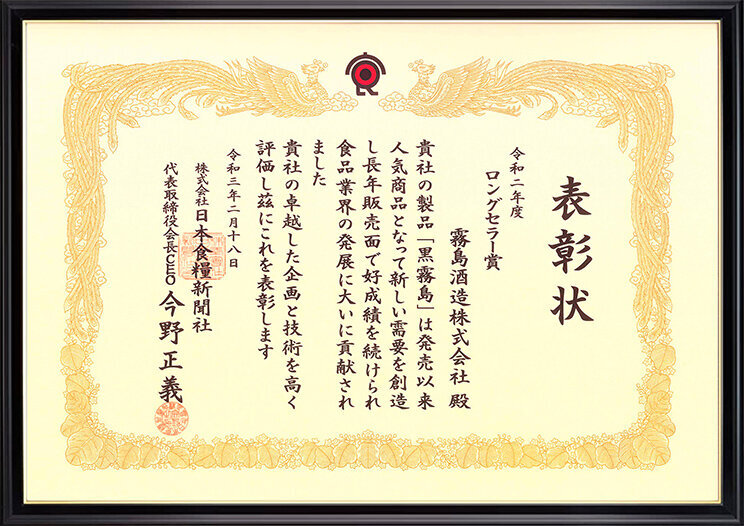
The journey that Kuro Kirishima has taken since then is evident from the fact that it continues to be consumed all over Japan.
"Of course, we were confident in the quality, but we thought it was more of a product for connoisseurs who are accustomed to drinking shochu, so we never expected it to be well received by customers who are not familiar with shochu and to become such a hit," says Okuno.
He was particularly taken aback by the assessment that "it's a sweet potato shochu, but it doesn't smell like sweet potatoes."
"At first, I thought, 'We were so focused on making it taste like sweet potato...' But then I realized that the flavor that we thought was sweet potato-like might actually be something that customers found fresh and pleasant."
Customers must have sensed the "sweet potato-ness" at its core—the plumpness, gentle sweetness, and warmth. This is how the "Kuro Kirishima" flavor was born.
The flavor of "Kuro Kirishima," which Okuno and his team created, has remained almost unchanged since then. However, Okuno believes that the time may come when it will be necessary to change that.
"When the time comes when young people no longer drink shochu, it will of course be important to preserve tradition, but I think one option is to reconsider the taste to suit the times."
If that were to happen, there would naturally be some backlash. It is unclear whether such a turning point will actually come, but whatever path "Kuro Kirishima" takes in the future, the beliefs that have been passed down from Junkichi to Okuno, and from Okuno to the younger blenders, will surely be poured out without reservation.
And so, "Kuro Kirishima" will continue to be the backbone of Kirishima Shuzo.



*Please refrain from sharing alcohol-related information with those under 20 years old.

- From hashtags
Interesting articlesSearch for