For about 15 years, the passion has never faded. So captivating was that single glass.
What laid dormant was potential.
A new world of sweet potato shochu opened up with one barrel.
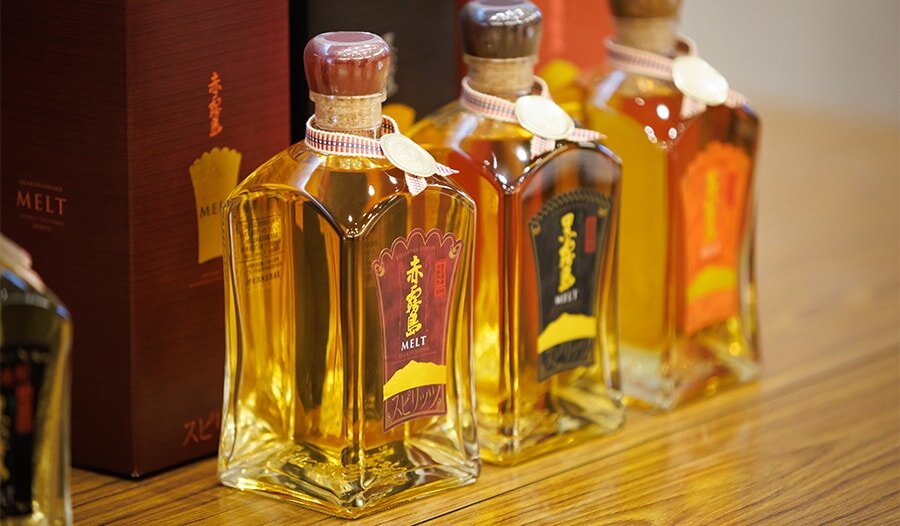
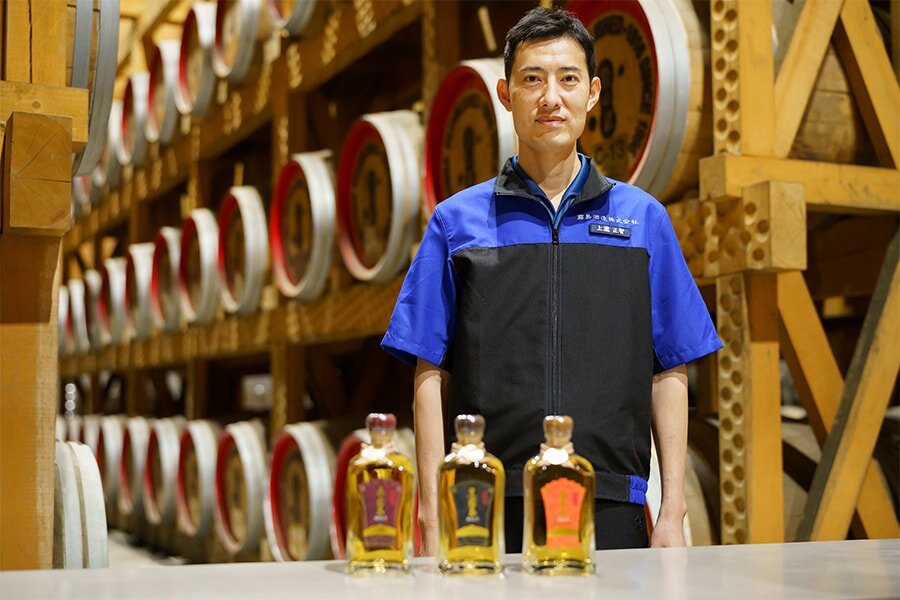
An eye-catching amber glow. This is from the Kirishima MELT series, which is made from base sweet potato shochu that has been carefully aged in barrels.
Following the limited-edition releases of the niche-known "Kuro Kirishima MELT" in 2006 and 2017, the lineup expanded with "Aka Kirishima MELT" and "Akane Kirishima MELT," relaunched in April 2024.
What was the story behind the creation of the Kirishima MELT series, which is made by aging Kuro Kirishima, Aka Kirishima, and Akane Kirishima in barrels?
"It all started about 15 years ago with a single barrel stored next to a storage tank."
These were the words of Masato Uwataki of the Refining Headquarters, who had just been appointed blender at the time.
Contained inside the barrel was sweet potato shochu made from purple sweet potatoes. After tasting the base shochu, which had developed a beautiful amber hue through long-term barrel aging, Uwataki was captivated.
"I was impressed to discover that there is a drink with such an appealing aroma."
The unique flavor is different from typical sweet potato shochu, whiskey, or brandy, and it intensified his desire: "I want to share this deliciousness with as many customers as possible."
However, at the time, shochu production was lower than it is today, and there was no way to allocate base shochu to the development of new products. It took several years for the production system to stabilize and for development to begin, but even during that time, Uwataki's motivation for development never waned.
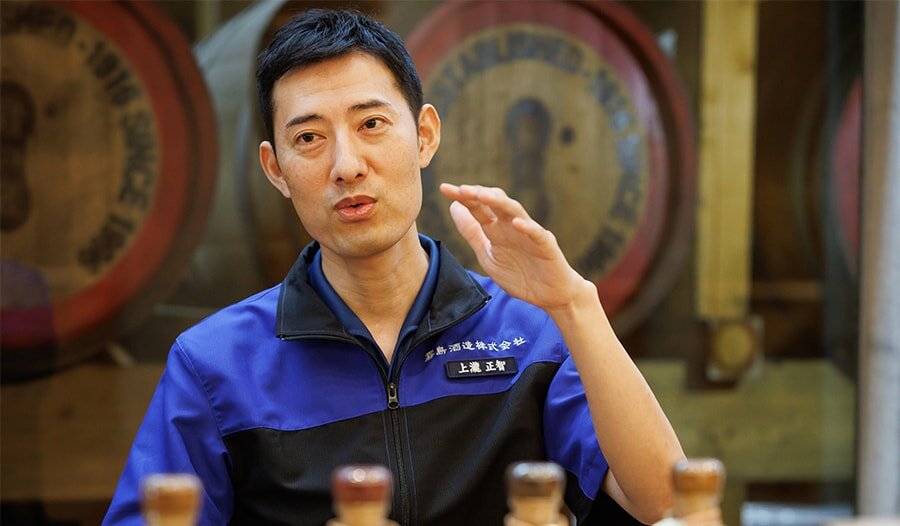
With the expansion of the factory and an increase in shochu production, they were finally in a position to start developing a barrel-aged sweet potato shochu, but even from there it was not all smooth sailing. They faced the obstacles inherent to barrel aging.
Normally, when developing a new product, a small amount of prototype is made first, which is then tasted by senior management, who evaluates its flavor before officially approving the development.
However, at this point, only large barrels with a capacity of several hundred liters could be procured, which is far too large to produce without development approval.
After searching for a way to produce a small amount of prototype, they came up with the idea of soaking the wood chips that are produced when carving the barrels in sweet potato shochu. Not only can they produce a small amount of shochu, but by increasing the surface area of the wood that comes into contact with the base shochu, they can quickly produce a product with a quality similar to that of liquor stored in barrels.
"For American white oak, a wood that is widely used in whiskey and other products, we used chips that are generated when barrel makers make barrels. For other woods that are not commonly used for barrels, such as cherry, chestnut, and camphor, I carved out block-shaped pieces myself with a carving knife to secure the amount of chips needed for the prototypes. I still remember how sore my muscles were," Uwataki says, recalling that time.
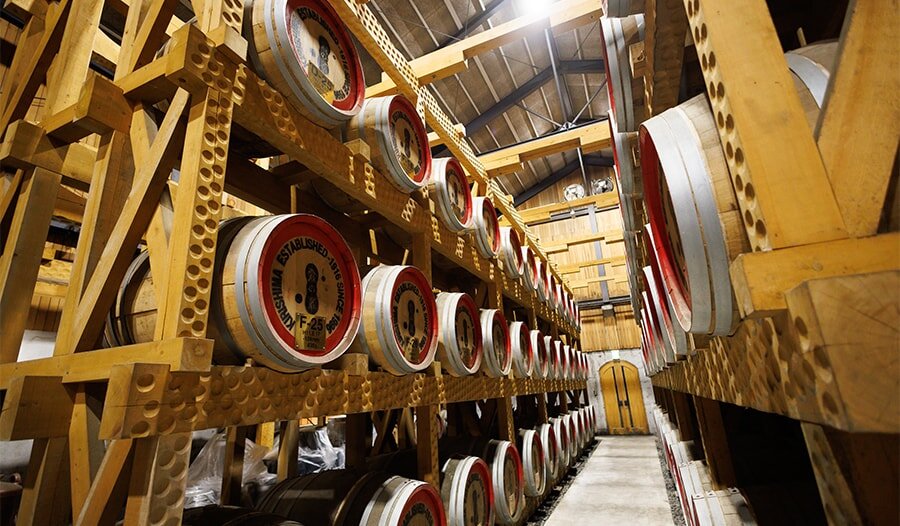
The previously released "Kuro Kirishima MELT" is aged exclusively in American white oak barrels, but for "Aka Kirishima MELT" and "Akane Kirishima MELT", it was decided that they would be aged in multiple barrels, including sherry and French oak barrels in addition to American white oak barrels.
How does the flavor of sweet potato shochu change when it is aged in barrels?
"The most distinctive feature is the woody aroma that comes from the barrel. Also, the process of charring the inside of the barrel helps bring out a vanilla-like flavor, resulting in a mellow, deep flavor. On the other hand, the base sweet potato shochu used this time has a strong individuality and appeal, so it would be pointless if that flavor were to be obscured by the flavor of the barrel. We conducted extensive testing to find the best type of barrel and the best length of time to age it."
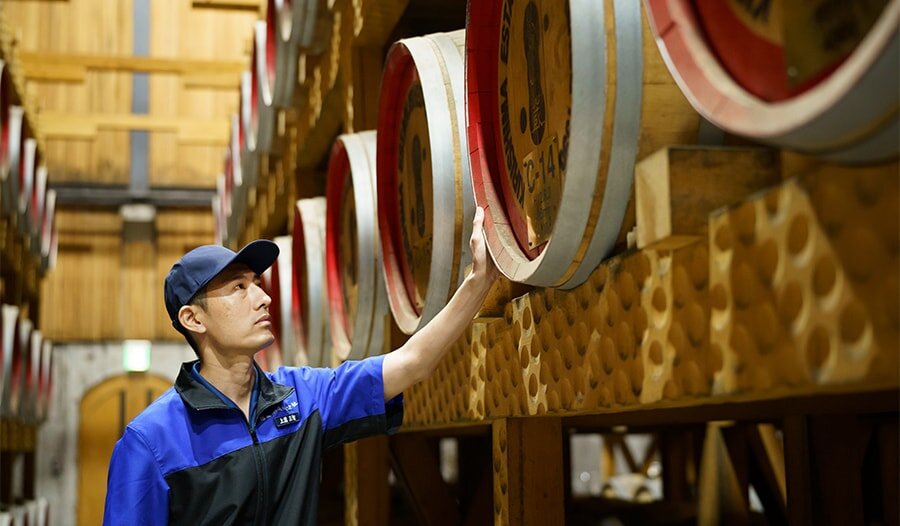
In terms of aging period, "Aka Kirishima MELT" blends shochu aged for 1 to 3 years.
"In addition to the type of barrel, whether the barrel is new or old, and whether the barrel is placed on a high or low shelf, all these small factors affect the speed of aging and the balance of the quality. We adjust the flavor by changing the aging period depending on the condition of the barrel and blending base shochu with different characteristics."
These efforts and testing bore fruit, achieving a quality that takes advantage of the characteristics of each base shochu Kuro Kirishima, Aka Kirishima, and Akane Kirishima, while also having a more melting flavor derived from the barrel.
Customers have responded well, with comments such as, "I'm not used to drinking barrel-aged liquors, but this is gorgeous and easy to drink," and "I can really taste the differences between the different base shochu, it's delicious."
"I would like to explore the possibilities of barrel aging further," says Uwataki.
What kind of flavors will be created by various barrel combinations and blends? What about other sweet potato shochu, barley shochu, or rice shochu? The possibilities of honkaku shochu, expanded through encounters with barrels, will never run dry as long as the passion continues.



*Please refrain from sharing alcohol-related information with those under 20 years old.



- From hashtags
Interesting articlesSearch for