Unlocking the infinite possibilities of sweet potato shochu — starting with sweet potato variety development.
"Kirishima 8".
A "miracle sweet potato" born from a breakthrough in breeding.
Developing sweet potato varieties is a daunting, never-ending journey.
"Honestly, at first I thought it was impossible."
Shuji Ikawa of Research and Development Department looks back on that time with a wry smile.
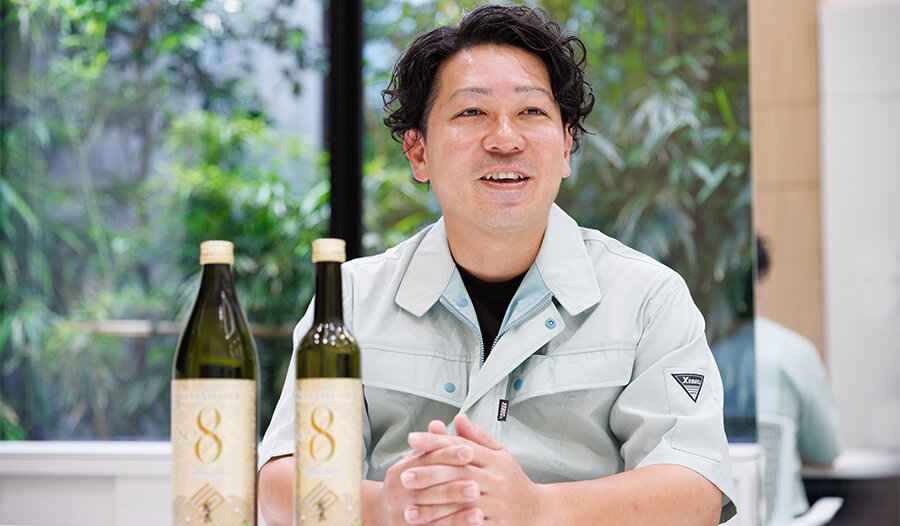
One day in 2015, a mission arrived at the R&D Department from Takuzo Enatsu, the representative managing director of the company.
"We want to create a new sweet potato shochu that has never existed before. Could we develop a sweet potato that will make it happen by ourselves?"
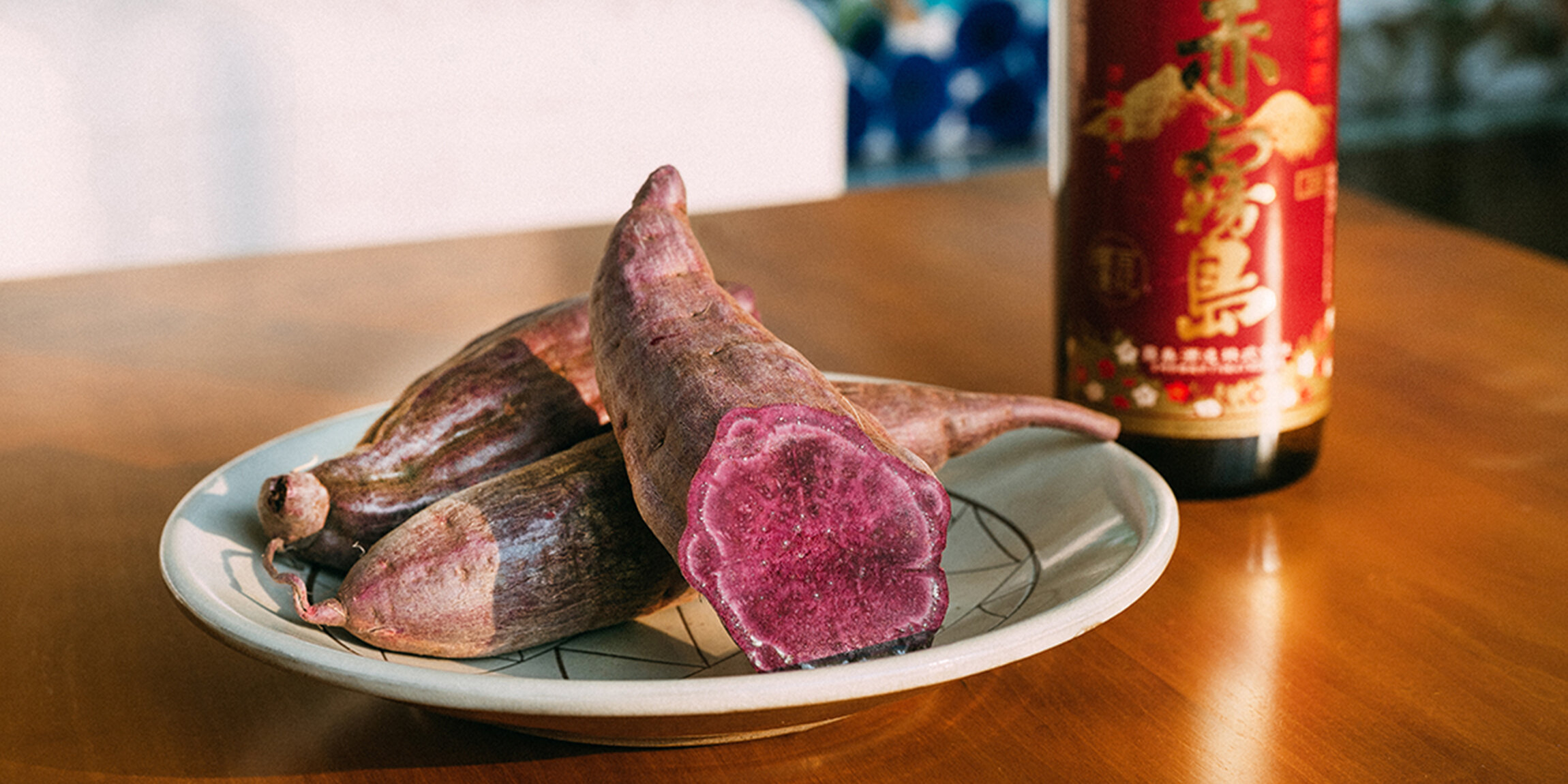
Kirishima Shuzo had already been eagerly working on the development of products using new sweet potatoes such as "Murasaki Masari" and "Tama-Akane"*which can be used as raw materials for sweet potato shochu.
However, those developments were done in cooperation with specialized government agencies, and it is unprecedented for a shochu manufacturer to breed sweet potatoes on its own. Even within Kirishima Shuzo, while numerous sweet potatoes had been used for shochu prototyping over the past 20 years or so, only four sweet potato varieties had ever been commercialized. It is too risky to tackle such a world of needle-through-the-hole probability, spending an enormous amount of time and money.
Yet Takuzo's resolve remained unshaken.
"Don't be afraid to fail. Just do it."
Thus began Kirishima Shuzo's first venture into developing a new sweet potato variety.
*The varieties developed by the National Agriculture and Food Research Organization (NARO), registered as "Murasaki Masari’ and "Tama-Akane."
Ikawa, who had just been transferred to R&D Department at the time, was selected to develop the new variety. Considering the costs and risks, he started the project alone. As it was the first attempt, the company did not have the knowledge or equipment. Furthermore, being a top-secret project, he couldn't rely on outside resources.
"It was a lonely battle. But because I didn't know anything, I prepared myself for a long battle and was determined to have fun while I was doing it."
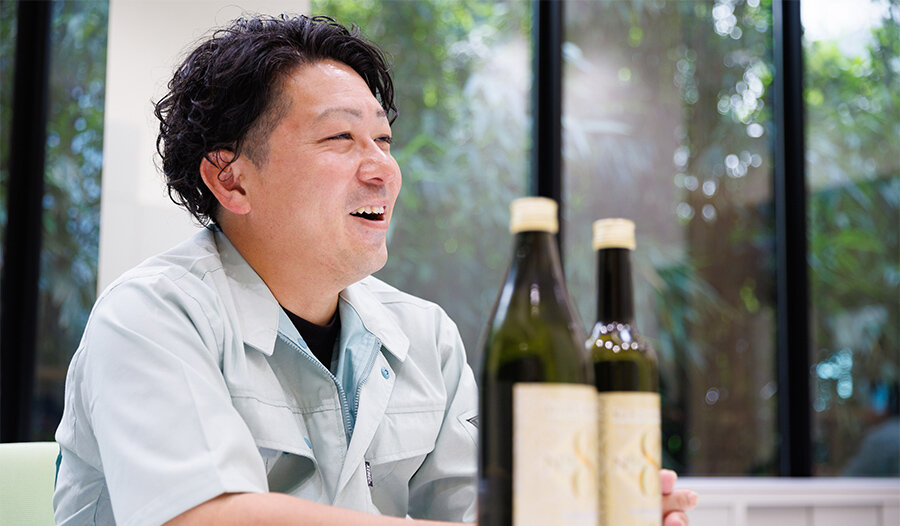
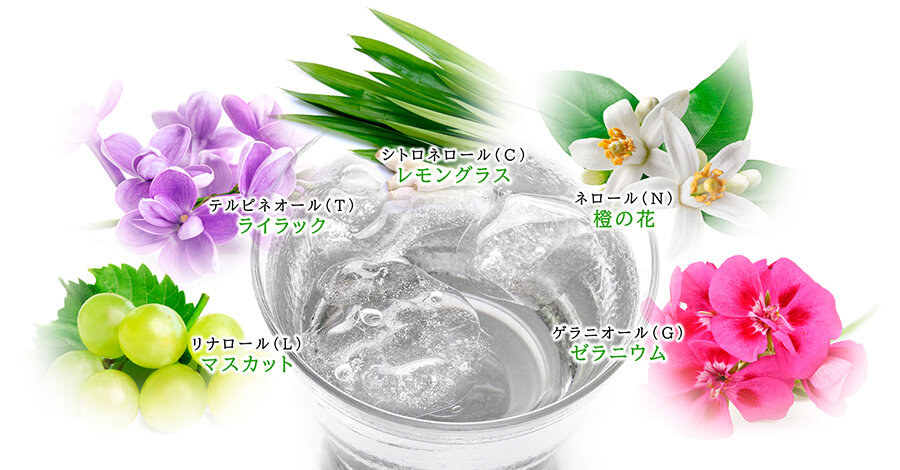
For the first 10 months or so, he devised a strategy by poring over academic papers and specialist books. Duringthistime, Ikawa focused on monoterpene alcohol (MTA)*, one of the characteristic aroma components of sweet potato shochu. MTA is an aromatic component found in fruits and flowers, and is extracted from sweet potatoes during the sweet potato shochu production process.
"Previous Research has shown that the MTA concentration in shochu varies depending on the variety of sweet potato used, and this concentration level affects the flavor of shochu. I thought that if we could develop a variety with a focus on increasing the MTA concentration beyond what is currently available, we might be able to create sweet potatoes that can be used to make sweet potato shochu with an unprecedented flavor."
*Monoterpene alcohol (MTA) is an aromatic component of shochu derived from sweet potatoes, and is one of the components forming fruit and herb-like aromas. The five main MTAs in shochu are linalool, terpineol, citronellol, nerol, and geraniol.
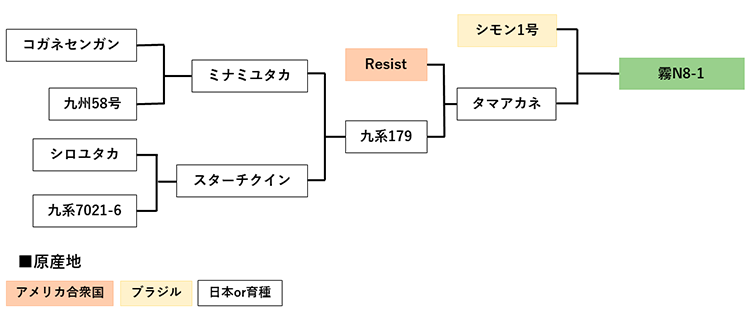
After a preparation period of around 10 months, in 2016, the first year of breeding, 37 crossbreeding combinations were carried out from around 20 sweet potato varieties collected with a focus on MTA. Ikawa was particularly hopeful about the eighth of these, a combination of "Simon No. 1," believed to be native to Brazil, and "Tama-Akane," which is also used as an ingredient in Akane Kirishima. In conclusion, it was from this very combination that a new sweet potato variety, "Kiri N8-1," was born, which would later be branded as "Kirishima 8."
"I was very surprised when I first tasted shochu made from Kiri N8-1. I never expected it to be a success in the first year, and at first I was more skeptical than happy."
Ikawa recalled, still carrying traces of that surprise and excitement.
To be selected as a sweet potato for use in the production of sweet potato shochu, it must meet at least two criteria: 1. Does it have a yield that is large enough to make farmers want to grow it? 2. Is it suitable for brewing (suitable for shochu)? Furthermore, in this mission, a third criterion was crucial: 3. Does it have a flavor that is clearly differentiated from others?
"We knew that the parents of Kiri N8-1, Simon No. 1 and Tama-Akane, had higher MTA concentrations in shochu than Kogane-Sengan, the most popular variety used in sweet potato shochu. However, compared to Kogane-Sengan, Simon No. 1 had lower yields and was only moderately suited to brewing. Tama-Akane had higher yields but lower brewing suitability. Kiri N8-1 was born from this combination, and it cleared both the hurdles of yield and brewing suitability, complementing the shortcomings of Simon No. 1 and Tama-Akane. What's more, the quality of shochu has an MTA concentration higher than conventional varieties*making it an 'unprecedented sweet potato shochu'. This has resulted in the birth of a variety that is perfect for full-scale product development."
*The main sweet potato honkaku shochu available in the market at the time of the trial production of Kiri N8-1 shochu in 2017.
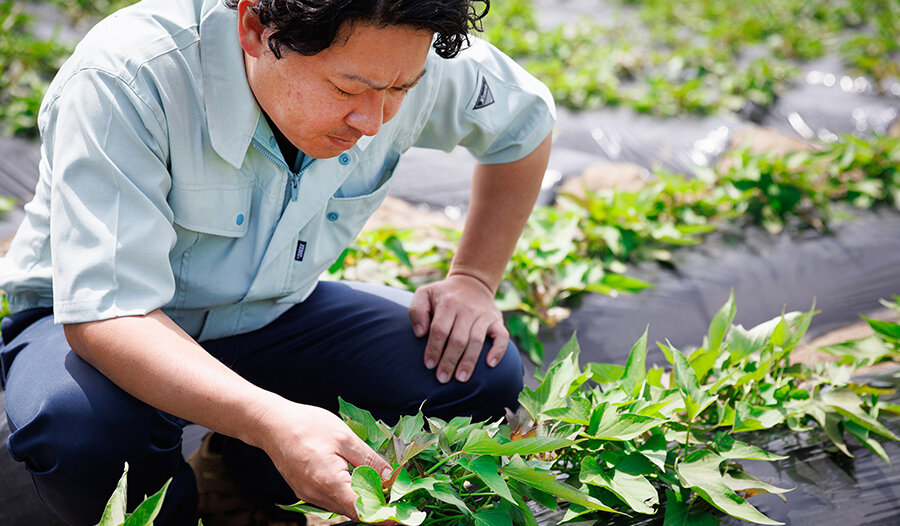
It has been about seven years since the start of developing new varieties.
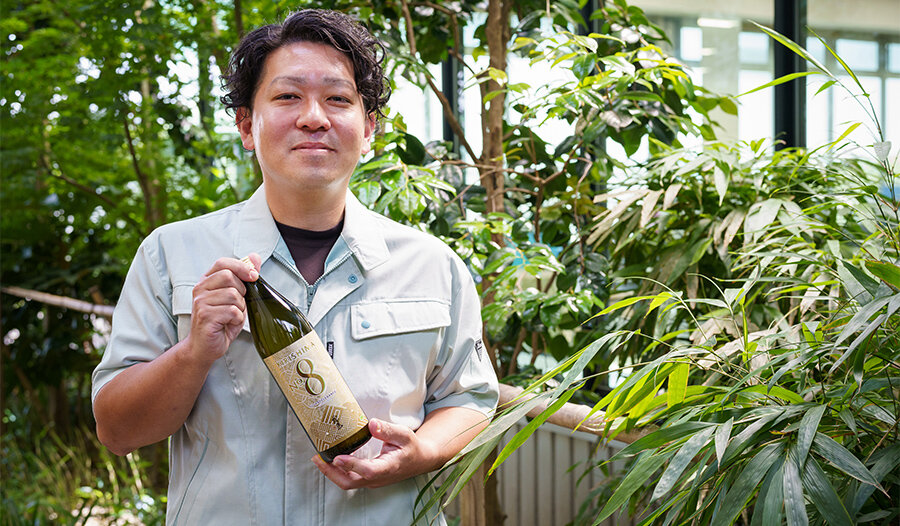
The sweet potatoes, including future varieties that may be derived from "Kiri N8-1," have been given the brand name "Kirishima 8," and sweet potato honkaku shochu "KIRISHIMA No.8" has been released, primarily in the Tokyo metropolitan area. This product name comes from the fact that "Kiri N8-1" was miraculously born from the eighth crossbreeding combination.
"KIRISHIMA No.8" is characterized by its fresh fruity flavor reminiscent of muscat and mandarin oranges, and is truly a product with a "flavor like never before" by Kirishima Shuzo.
After that, they continued to work on improving the "Kiri N8-1" variety in collaboration with the National Agriculture and Food Research Organization, and succeeded in developing a successor variety, "Kiri N8-2," which has improved yield, suitability for brewing, and concentration of characteristic components.
With a system now in place to reach a broader customer base, the sales area for KIRISHIMA No.8 was expanded nationwide in July 2024.
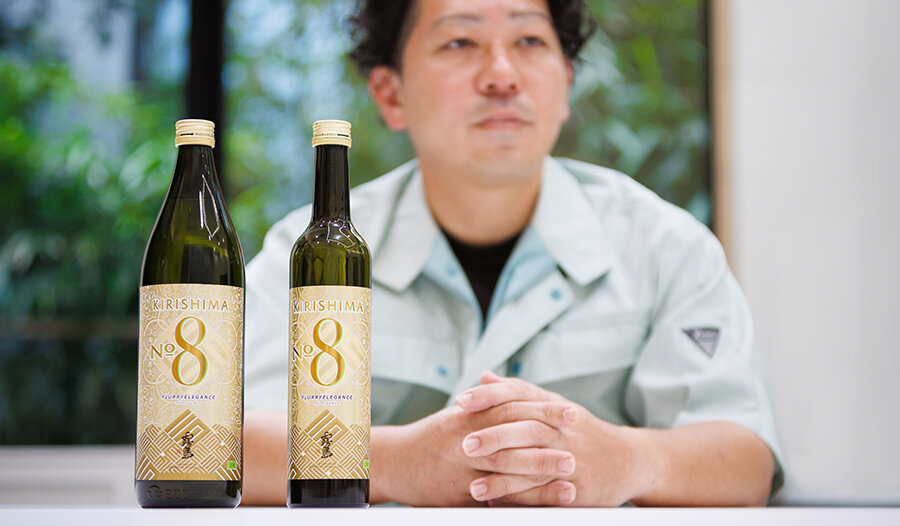
"We take pride in KIRISHIMA No.8 as a product that not only appeals to sweet potato shochu enthusiasts but also delights those who previously found it unpalatable," says Ikawa. "Moving forward, we will continue pursuing unprecedented new sweet potato varieties to enable even more people to enjoy sweet potato shochu."
What kind of shochu will the next sweet potato produce? What kind of flavor will it bring forth? The journey of endless challenges continues.



*Please refrain from sharing alcohol-related information with those under 20 years old.


- From hashtags
Interesting articlesSearch for