The first generation: solid and steadfast. The previous generation: creative and resourceful. Three generations weaving the essence of Kirishima Shuzo.
It all started with a small shop.
The history of Kirishima Shuzo unraveled through the Enatsu family.
History of Kirishima Shuzo began in 1916 when Kichisuke Enatsu started producing shochu at Kawahigashi Enatsu Shoten in Miyakonojo City, Miyazaki Prefecture.
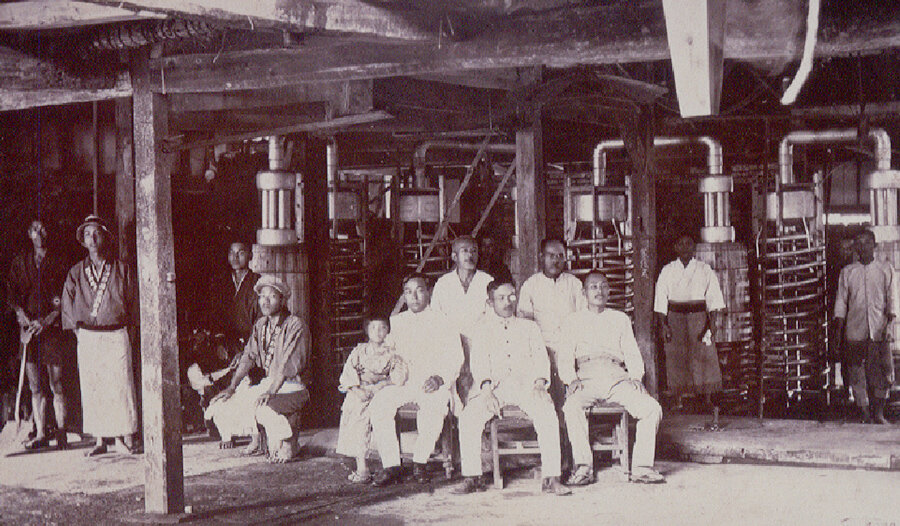
In 1945, the second president, Junkichi Enatsu, took over. Currently Junkichi's second son, Yoriyuki, serves as President and CEO, while his third son, Takuzo, serves as Senior Managing Director, both carrying the banner of Kirishima Shuzo.
It has been over 100 years since the company was founded in the Taisho era. What has been passed down from the first and second generations who built the foundation of Kirishima Shuzo? We spoke to Yoriyuki and Takuzo.
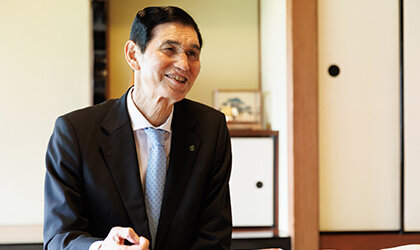
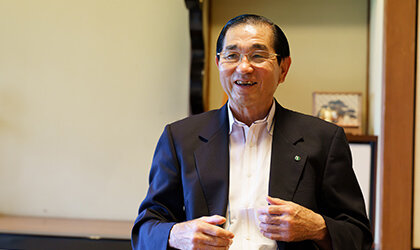
Located in "Shochu no Sato Kirishima Factory Garden," the "Kirishima Memorial Hall KICHISUKE," is the relocated original building that was built during the time of the founder Kichisuke.
The spacious earthen-floored area, which also served as a store, leads to the living quarters of the Enatsu family. Beyond the windows lies the splendid garden, a hobby of Kichisuke's. "I was delivered here by a midwife," says Yoriyuki with nostalgia.
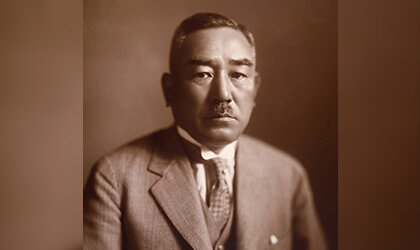
Although they never spoke directly with Kichisuke, this store and residence run by their grandfather is a childhood memory for Yoriyuki and Takuzo.
When they were young, there was almost no boundary between home and work. Employees were constantly coming and going, the master brewer slept in the koji room, and they lived together like a family. In the evening, people would gather after work and a party would begin in the hall.
The memories of growing up like this have influenced the way Kirishima Shuzo operates, which Yoriyuki holds dear. "There's shochu, and there are people's smiles. That's the scene I've witnessed here ever since I was a child. I believe that Kirishima Shuzo's mission is to create 'happy moments' that are shared with good drink."
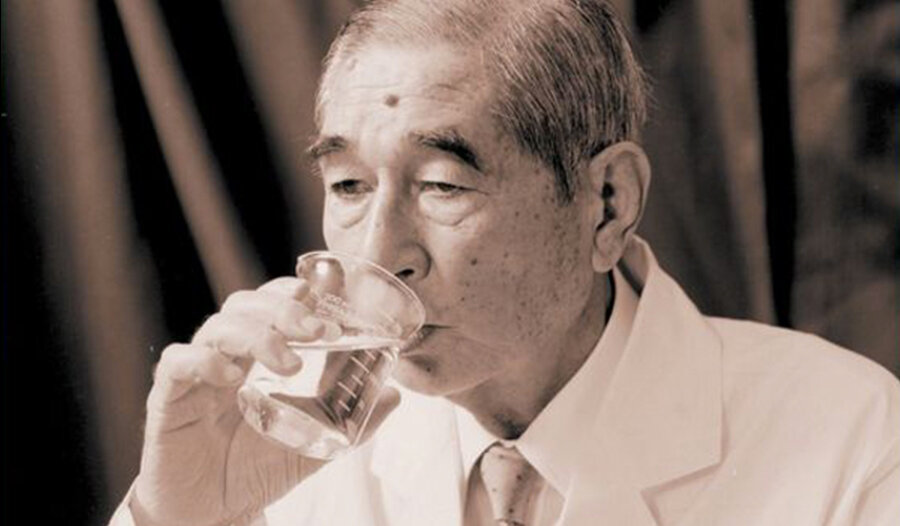
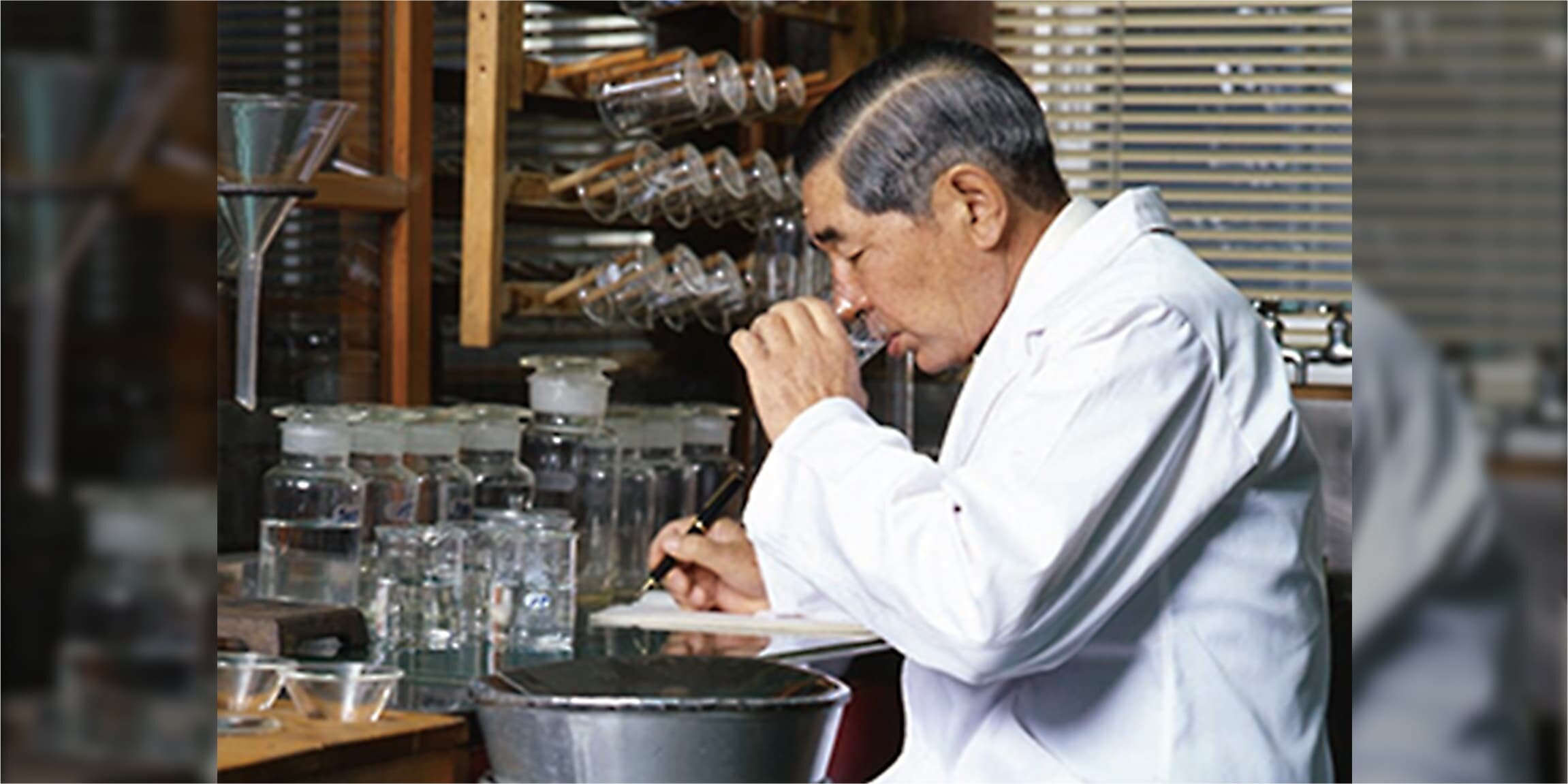
In one word, the second generation Junkichi was a man of ingenuity.
He majored in applied chemistry at what is now the University of Tokyo and was an avid machine enthusiast. From a young age, Yoriyuki and Takuzo watched their father's eyes light up as he was absorbed in machines. "He would ride a tank*that he brought from somewhere and cut down trees in the mountains on our property. He was always looking for something interesting, new, and of a high level," says Takuzo.
*After the war, there was a time when tanks that were no longer needed were refurbished and used for civilian purposes (heavy machinery and construction machinery).
With his originality and boldness, Junkichi brought about one revolution after another at Kirishima Shuzo. Unconstrained by conventional methods and stereotypes, he transformed the shochu by abolishing the "Toji system," which was unusual in shochu industry at the time, expanding production scale through mechanization, inventing an original distillation machine, and advocating that "otsu-rui" (class B) shochu should be renamed as "honkaku shochu" (authentic shochu).
"He would lie down in his office, pondering what to do, eat his favorite food, eel, then lie down again and think again. He may have seemed to go at his own pace, yet his mind was always filled with unconventional ideas. That's the kind of person he was," Takuzo recalls of his father. Takuzo grew up watching this and now displays the same energy as his father.
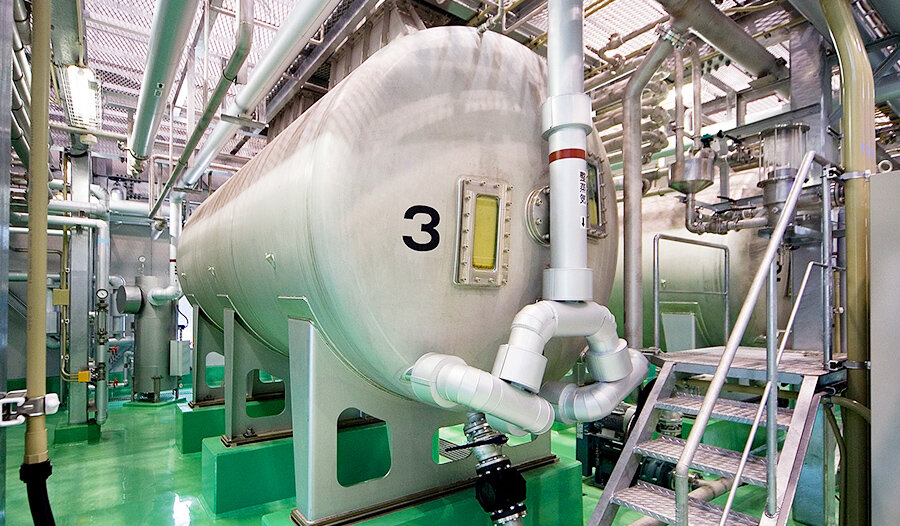
Kirishima Shuzo has a facility that generates biogas from shochu lees and reuses it as fuel.
This is the fruition of Takuzo's strong desire. At the time, shochu lees were thought to have no choice but to be disposed of. Takuzo, who was still a new employee at the time, raised doubts about this. "If you sense something there, you have to pursue it relentlessly. Without that attitude, nothing is born. That is what I learned from my father's back."
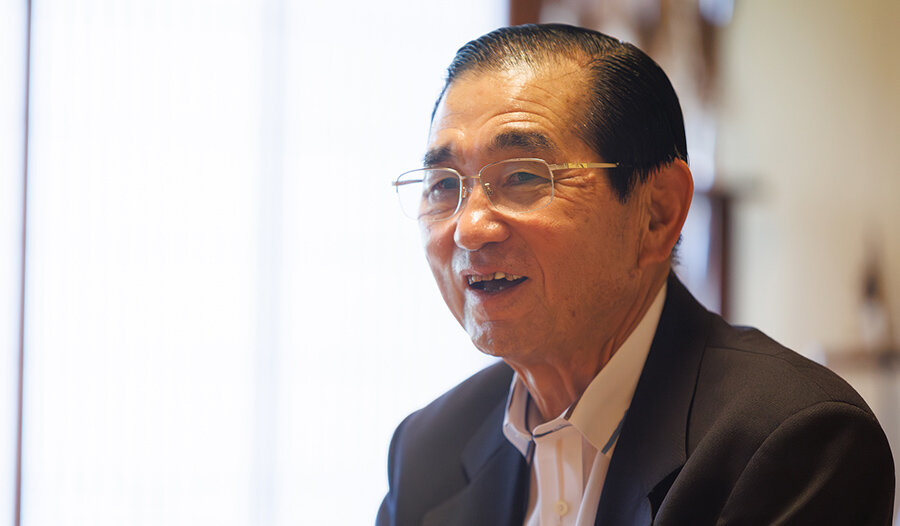
Meanwhile, Yoriyuki calmly looks back at what his grandfather and father left behind, and what was missing.
"My father was of the opinion that if you make good products, they will sell. But I thought that wasn't enough, so I've always focused on sales."
In 1973, three years after joining the company, Yoriyuki loaded over 800 bottles of shochu onto a two-ton truck and drove eight hours one way to Fukuoka, which was still an unexplored area at the time. He knocked on the doors of major companies in Kyushu, relying on his connections from Miyazaki Prefecture, and went around greeting people with one-liter bottles of shochu and sweet potatoes. He asked about their favorite izakaya bars and went there to sell the product. Through repeated one-on-one communication, he steadily expanded his sales channels.
In 1996, when Yoriyuki took over, Kirishima Shuzo was a local company that ranked eighth in the industry in terms of shochu production. (Source: 1996 Monthly Report on Alcohol and Food Statistics)
With the determination to "do whatever it takes," he poured his heart and soul into sales. As a result, by 2012, the company achieved its first-ever top spot in Japan for shochu manufacturer sales. (Source: Teikoku Databank)
Yoriyuki explains his sales method, which differs from that of his father, Junkichi, who placed emphasis on quality:
"Good quality alone does not guarantee sales. Sales is also important, but it is also something that cannot be done unless you have absolute confidence in the quality. It is the combination of the 'Kirishima-ness' that has been passed down since the time of Grandfather Kichisuke that has made Kirishima Shuzo what it is today."
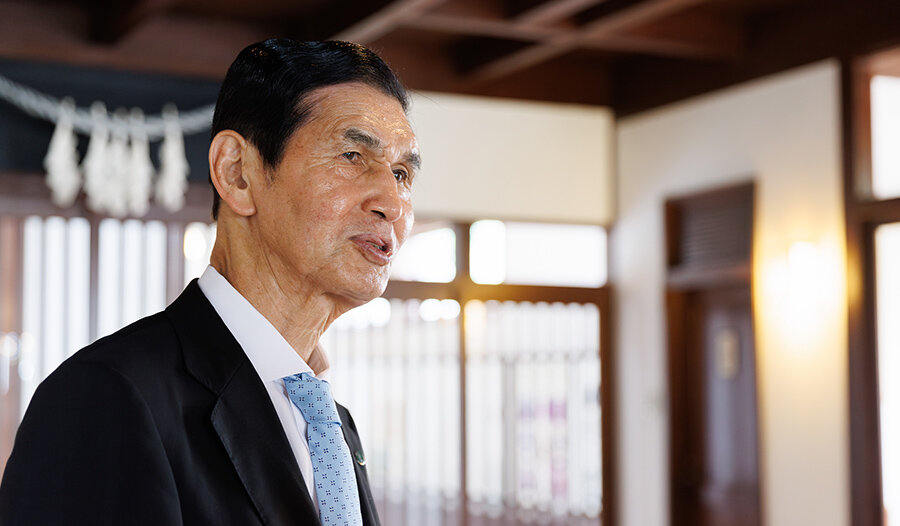
The founder, Kichisuke, would personally serve shochu and smile as he watched people sip it with gusto. The second, Junkichi, would mutter, "If I can make some delicious sweet potato shochu, I'll take it to Tokyo myself and recommend it to customers."
Liquor is something irreplaceable that brings happiness to people. The passion of these two men has been passed down to Yoriyuki and Takuzo, and lives on here today.



*Please refrain from sharing alcohol-related information with those under 20 years old.

- From hashtags
Interesting articlesSearch for