What is the reason behind shochu boom that reflected the times and captivated the era?
Just as there are trends in various things from time to time, such as fashion, entertainment, food, and language, the world of shochu also experiences fads.
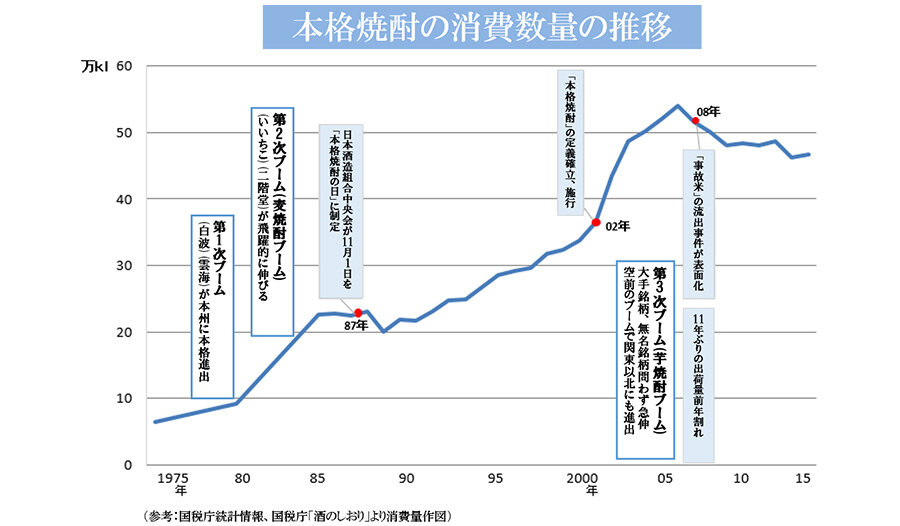
Sweet potato shochu, including Kuro Kirishima, gained significant attention in the 2000s. Including this, it is said there have been three shochu booms in postwar Japan.
The first shochu boom occurred in the late 1970s, when a global boom known as the "white revolution" occurred, in which people enjoyed colorless, transparent alcoholic beverages such as vodka, gin, and tequila. In response, shochu boom also occurred in Japan.
A shochu manufacturer in Kagoshima aired a commercial for their sweet potato shochu, recommending a 6:4 ratio of hot water to sweet potato shochu. This unprecedented suggestion of a drinking style, which was broadcast on television, which had become widespread during the period of rapid economic growth, quickly attracted people's interest. Also, soba shochu became popular nationwide due to its ease of drinking.
During this period, shochu market expanded to approximately three times its previous size.

The second shochu boom occurred a little later, in the early 1980s.
Inexpensive and easy to adapt white liquor became a big hit, and chuhai and sour drinks became popular at izakayas. Canned chuhai was also first released around this time.
Barley shochu, which is refreshing and easy to drink, also became popular.
This suggests that during the pre-bubble economic boom, people began enjoying alcohol in a more casual way.

Then in the 2000s, sweet potato shochu, which had previously been popular in rural areas, began to spread across the country, sparking a third shochu boom. In Tokyo, a flurry of shochu specialty shops and shochu bars opened.
In 2003, shochu shipments surpassed sake for the first time in 53 years, a truly historic hit. As its popularity grew, premium sweet potato shochu became hard to obtain. Sweet potato shochu was even enjoyed at a diplomatic event between a former French president, known as shochu lover, and a former Japanese prime minister.
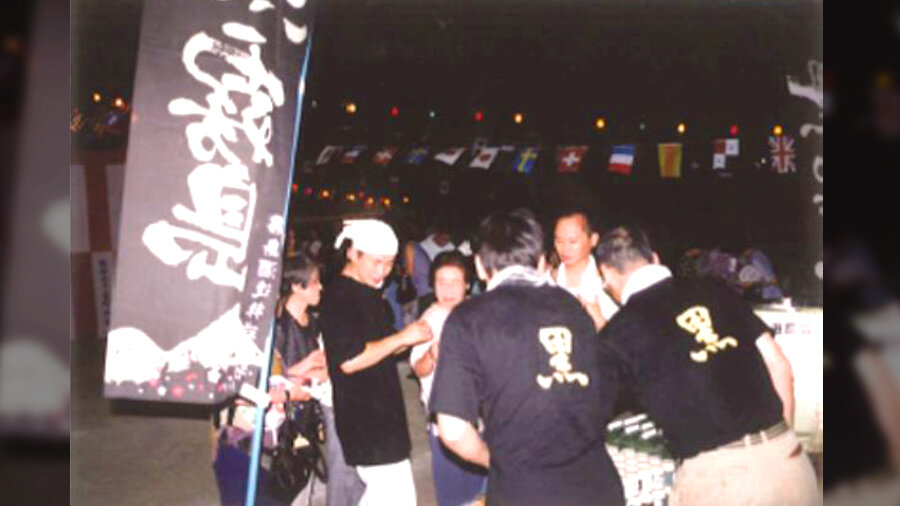
During the unprecedented sweet potato shochu boom, Kirishima Shuzo's “Kuro Kirishima” was no exception, with demand at one point outstripping supply.
At the time, the sales team spent every day apologizing for not being able to deliver enough products to liquor stores and restaurants and explaining the situation.
A boom is a large, complex wave that engulfs the entire society. It is not something that can be created simply by someone's intention.
However, enthusiasm doesn't arise without a reason. So why has sweet potato shochu become the main player in the third boom?
One of the reasons behind this is the improved drinkability.
For better or worse, sweet potato shochu tends to retain the flavor of the ingredients. In the past, it had a strong sweet potato smell and an unpleasant taste, which made it difficult for everyone to accept it.
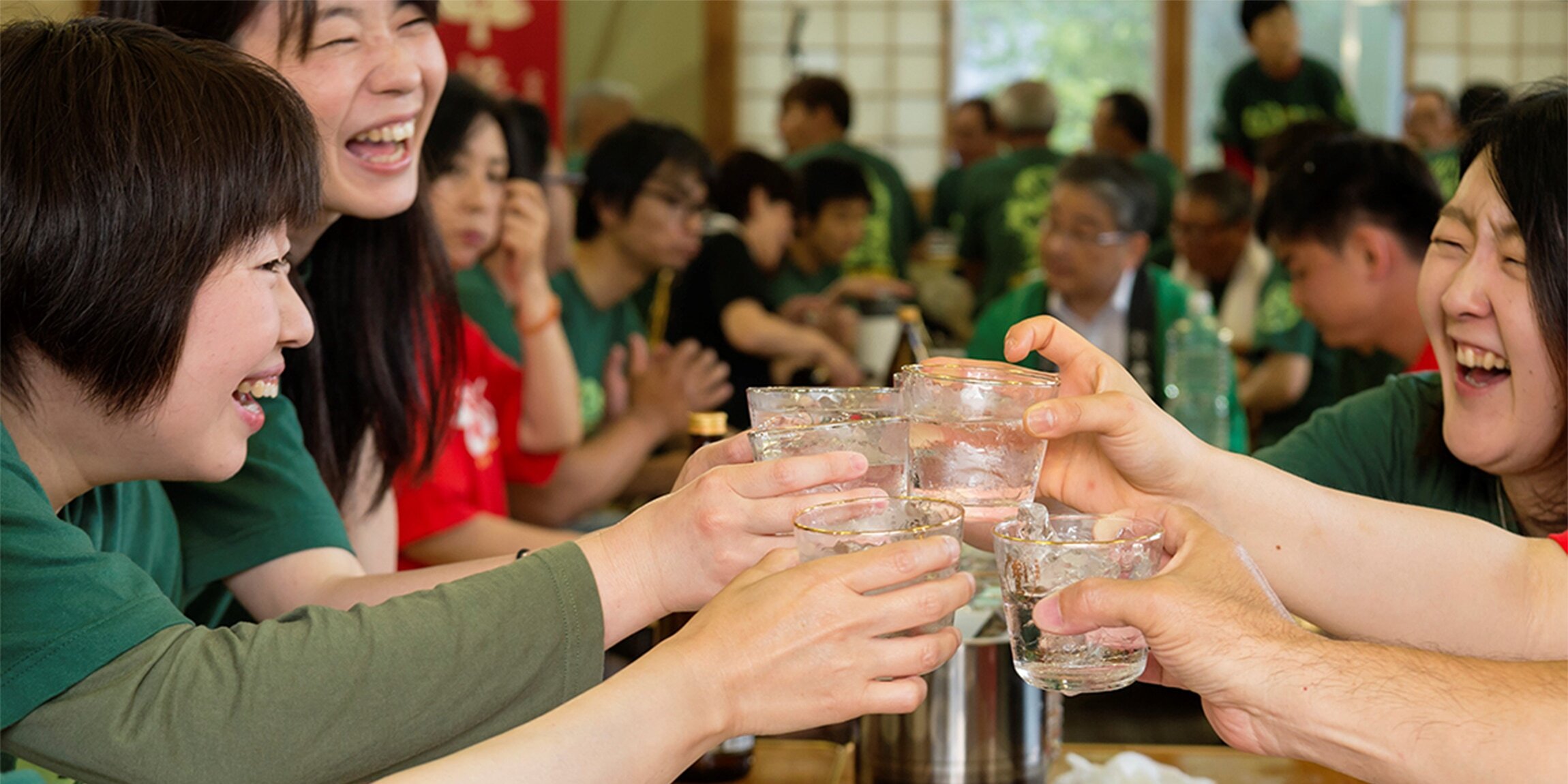
However, manufacturers continued to work hard. By improving the quality of the sweet potatoes used as an ingredient and refining manufacturing techniques, sweet potato shochu became easy to drink. The sweet potato aroma was reevaluated as a rich flavor rather than a strong one, and it became widely enjoyed by people unaccustomed to drinking shochu, including women.
Another major factor was the growing health consciousness at the time.
The media highlighted shochu's healthy image—zero sugar and purines, and its potential to prevent thrombosis—leading more people to develop a positive perception of shochu.
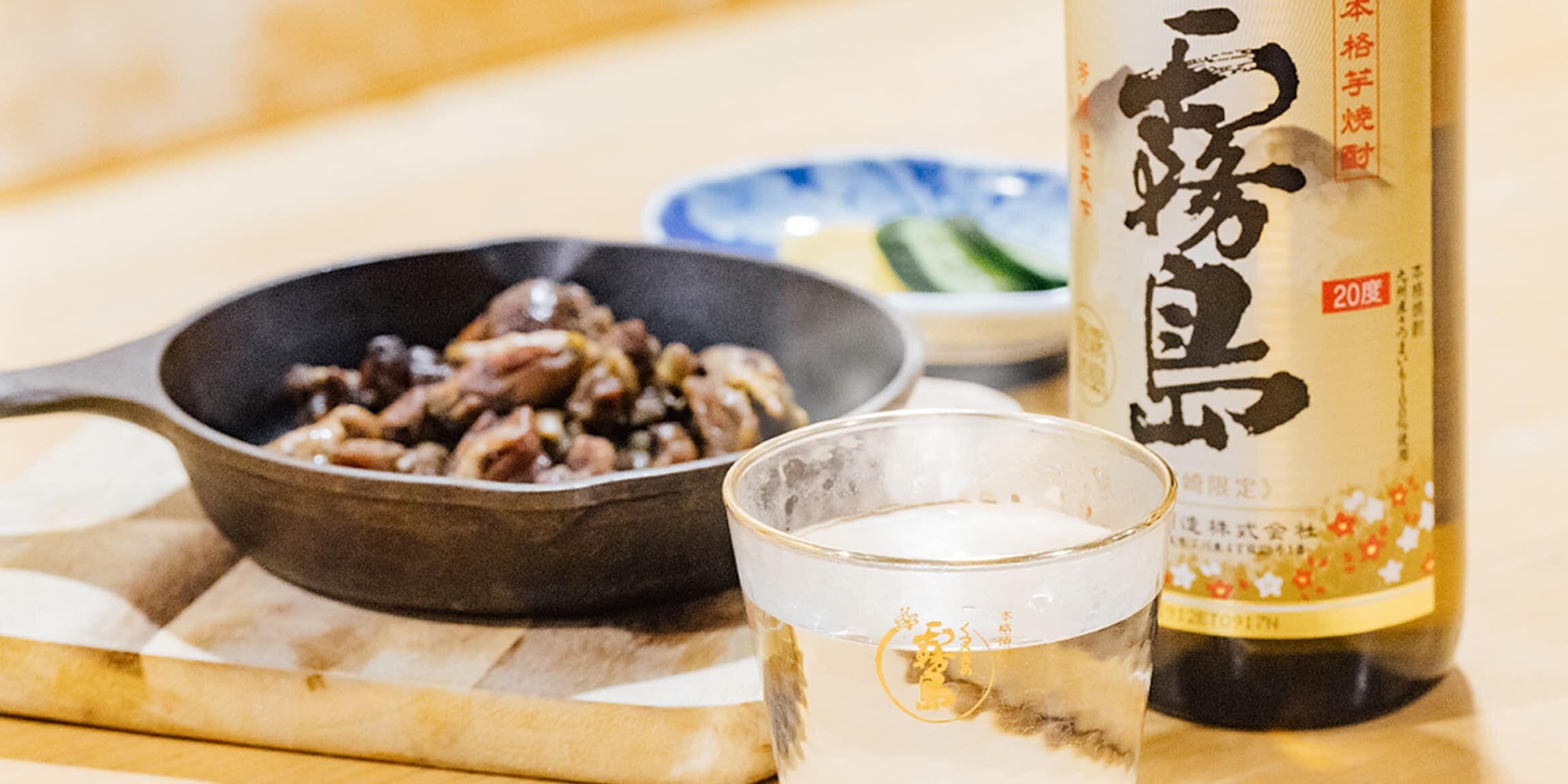
The widespread image of "black food = good for your health" was also a major boost for Kirishima Shuzo. Black sesame, black vinegar, black beans...there was no way they wouldn't follow suit.
By promoting the image of Kuro Kirishima as a "black shochu," it established its brand image as something that stands out from other sweet potato shochu.
What further prolonged the boom was the versatility of sweet potato shochu.
It wasn't just one particular brand that was popular; a wide variety of sweet potato shochu, from premium ones to more affordable varieties and even unique ones from small, regional distilleries, coexisted and created a boom.
Another characteristic of sweet potato shochu is that its flavor changes depending on the variety of sweet potato, its freshness, and the aging period. This allows people to find a variety of ways to enjoy it within the sweet potato shochu category, whether it be to find their favorite flavor or to drink it for different occasions.
These are likely the main reasons why the sweet potato shochu boom was not a passing fad, but has become established as a profound "culture" that continues to this day.

Easy to drink, health-conscious, and versatile.
Thus began the third shochu boom, centered on sweet potato shochu. Looking at it this way, alcohol trends may be a mirror that reflects the times.
Alcohol is not a necessity in life. Precisely because of this, what people seek from it is greatly influenced by shifts in food culture, lifestyle, and the prevailing “mood” of the times.
Shochu culture has been a part of human life throughout the ages, adding color to the joyful moments of each era.
Currently, a new genre known as "fragrant shochu" is attracting attention, and shochu with distinctive fruity aromas such as banana and muscat grapes are being developed one after another.
Will "fragrant shochu" spark the fourth shochu boom? What will shochu of the next era reflect? It might be fun to choose a glass to enjoy tonight with these perspectives in mind.




*Please refrain from sharing alcohol-related information with those under 20 years old.

- ハッシュタグから
気になる記事を探す