Shochu has its place in people's conversations and food culture.
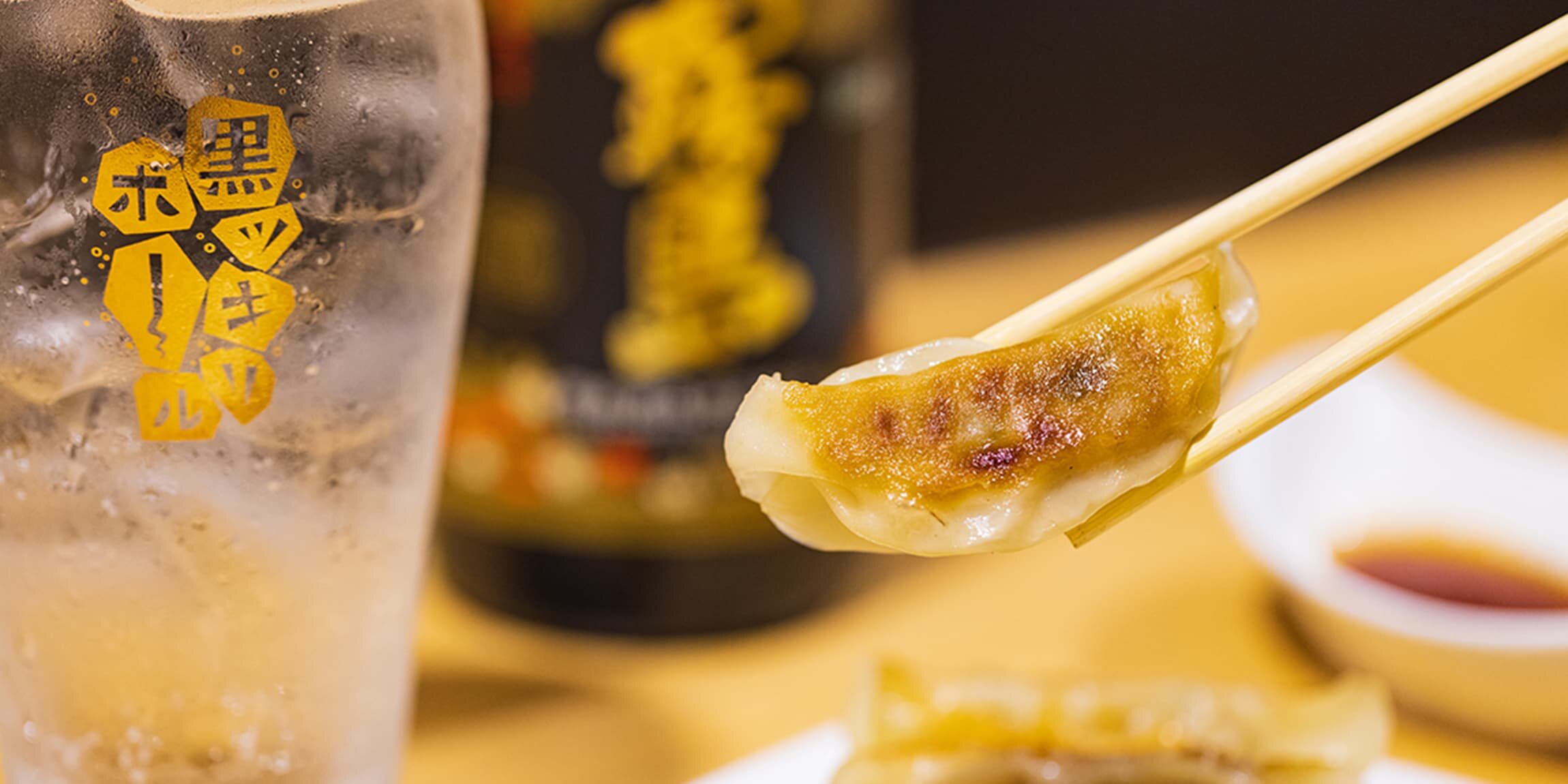
"Shochu culture is established on food culture."
How did this philosophy, so deeply rooted at Kirishima Shuzo, come to be?
"Shochu culture is established on food culture."
This is a phrase heard time and again at Kirishima Shuzo.
This philosophy was embodied in the long-running series "Delicious things are delicious," which ran for 33 years from 1987 to 2020.
Takuzo Enatsu, Senior Managing Director of the company, reflected on the launch of this project.

"Delicious things are delicious" is a project that features delicious food and local producers from Miyazaki Prefecture, the home of Kirishima Shuzo, and introduces them through newspaper advertisements and other means. The aim was to convey that Kirishima shochu is a drink that can be enjoyed with food.
Back in 1987, when the project was launched, Kirishima Shuzo was just a distillery that produced and sold sweet potato shochu, primarily in Miyakonojo, where its headquarters were located.
In this situation, shochu made from barley and buckwheat became popular, and Takuzo, who was also the head of the Planning Office, felt compelled to take some kind of new action.
That's how "Delicious things are delicious" project started.
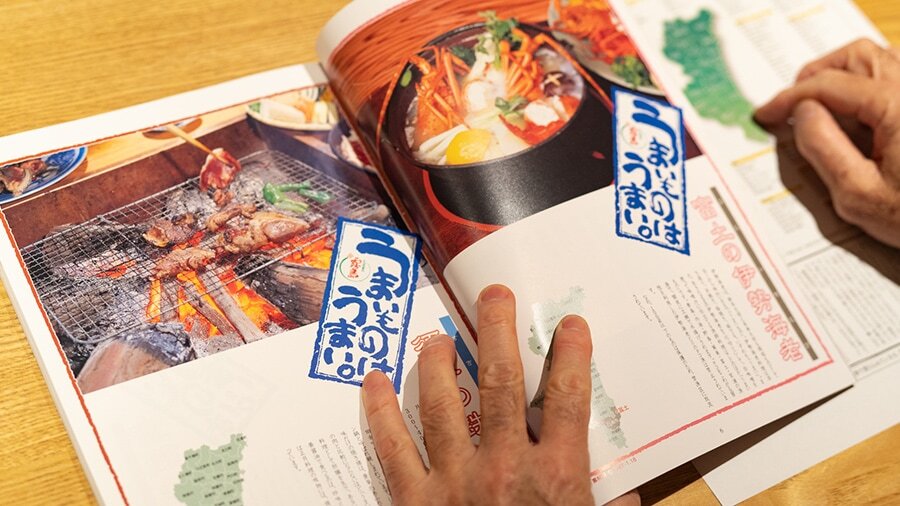
"The 'Delicious things are delicious' project have originated not so much as an advertisement, but rather from a desire to contribute to the local community," Takuzo begins.
In the initial planning stages, Takuzo focused on regional characteristics. Miyazaki has a unique food culture and shochu culture. He wanted to explore its roots and gain a deep understanding of the culture. This desire grew within Takuzo, and he personally visited various regions within the prefecture, reflecting on his ideas.
One of the most memorable things he saw was "sanobori." "Sanobori" is a custom where three or four farming families gather to work together on rice planting, and then share a meal together. When they're tired and sweaty, they spread out "mushiro*" straw mats on a nearby embankment and enjoy shochu along with dishes like simmered vegetables and grilled local chicken. Apparently, this is what makes it taste the best.
*This refers to a mat made by weaving straw or similar material.
Takuzo says he feels there is something in common between "Kagura" (traditional Shinto music and dance) and this "sanobori" custom. Although the form varies from region to region, the dances continue all night from evening until dawn, with people of all ages gathering and cooperating, and local dishes such as river fish wrapped in kelp and soba noodles, as well as shochu being served. Because the settlements in the mountain villages are far apart, there were encounters that would not occur in everyday life. The festival was also a way to create connections between people.
Later, Takuzo actively read folklore literature and encountered the idea that "interaction cannot occur without food, alcohol, and festivals," which he deeply resonated with.
He even felt that "this is an idea that is applicable not only in this region but all over the world."
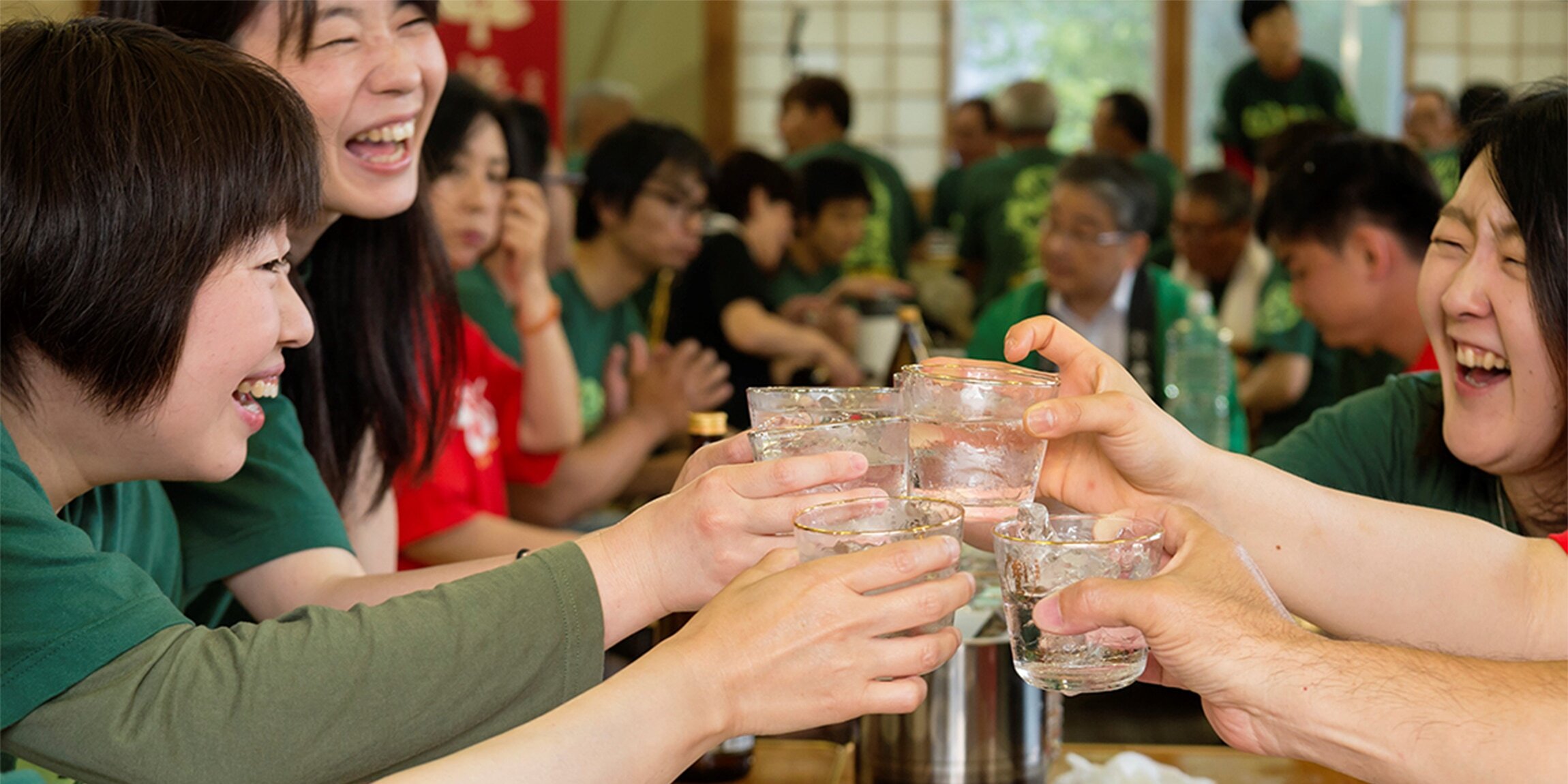
"We want to focus on local ingredients and convey the joy of people gathering around a meal. And in that context, we hope shochu can be a supporting element that enhances that enjoyable time."
With that in mind, the project "Delicious things are delicious" began.
Although the project had started, the initial staff involved consisted of only 3-4 people. The work was done manually.
They made phone calls to agricultural cooperatives, fisheries cooperatives, universities, and producers to gather information about local food, and then went to the locations to conduct interviews. Takuzo was also the one who wrote the articles.
"From the very beginning, I was determined to create something that would allow readers to picture the local scenery like a panoramic photograph just by reading the text."
Having had few opportunities to write, Takuzo struggled at first. But with each article he wrote, he gradually began to find his footing.
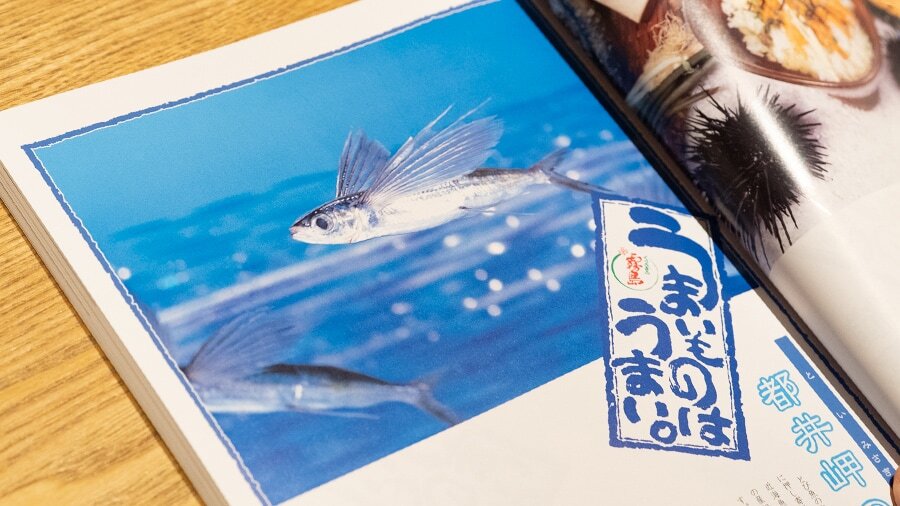
When it came to photography, no one taught them how to do it. They experimented, thought things through, and devised their own creative techniques.
For example, the photograph featured in the article on flying fish was not actually taken at sea. Instead, they layered sheets of glass coated with lard to mimic the ocean's surface and used fishing line to recreate the moment a flying fish leaps above the water.
Through this ingenuity, they produced a dynamic image that looked as though it had been photographed out at sea.
Furthermore, an article about mehikari—a fish that was once regarded as little more than livestock feed—helped change perceptions of the species, which eventually became a local specialty.
Over the years, Takuzo went on to write around 400 articles, accounting for nearly half of the series' total output of more than 800.
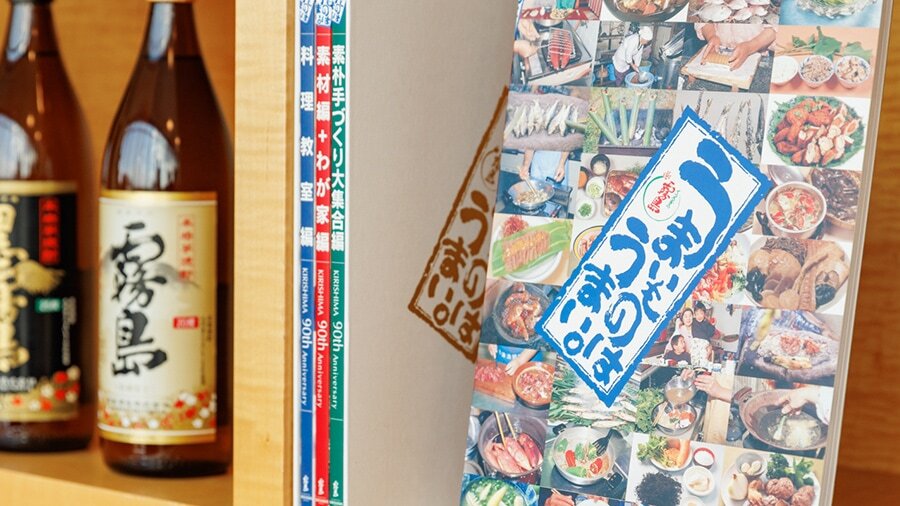
Supported by Miyazaki Prefecture's rich food culture, "Delicious things are delicious" ran for 33 years before coming to an end in 2020. It can be said that this project achieved an exceptionally long run for newspaper advertising. Throughout that time, it did not put Kirishima shochu front and center, but rather maintained the stance that the main focus was always on local food.
This, too, was unusual for an advertisement at the time. Takuzo repeatedly said, "Be humble and not arrogant. Never forget that shochu tastes good because the food is good."
"Shochu culture is established on food culture."
These words embody Takuzo's conviction, forged through his own experiences, and remain deeply rooted at Kirishima Shuzo to this day.
Although the "Delicious things are delicious" series has come to an end, the spirit it fostered will continue to live on, remaining an unwavering guiding principle for Kirishima Shuzo.




*Please refrain from sharing alcohol-related information with those under 20 years old.


- From hashtags
Interesting articlesSearch for